The Yeohs of Ipoh: Yeoh Khuan Joo and the Family That Gave Malaysia an Oscar Winner
YLCO FAMILIES | PART 2 OF 10
He arrived in 1899 and started out as someone else's clerk.
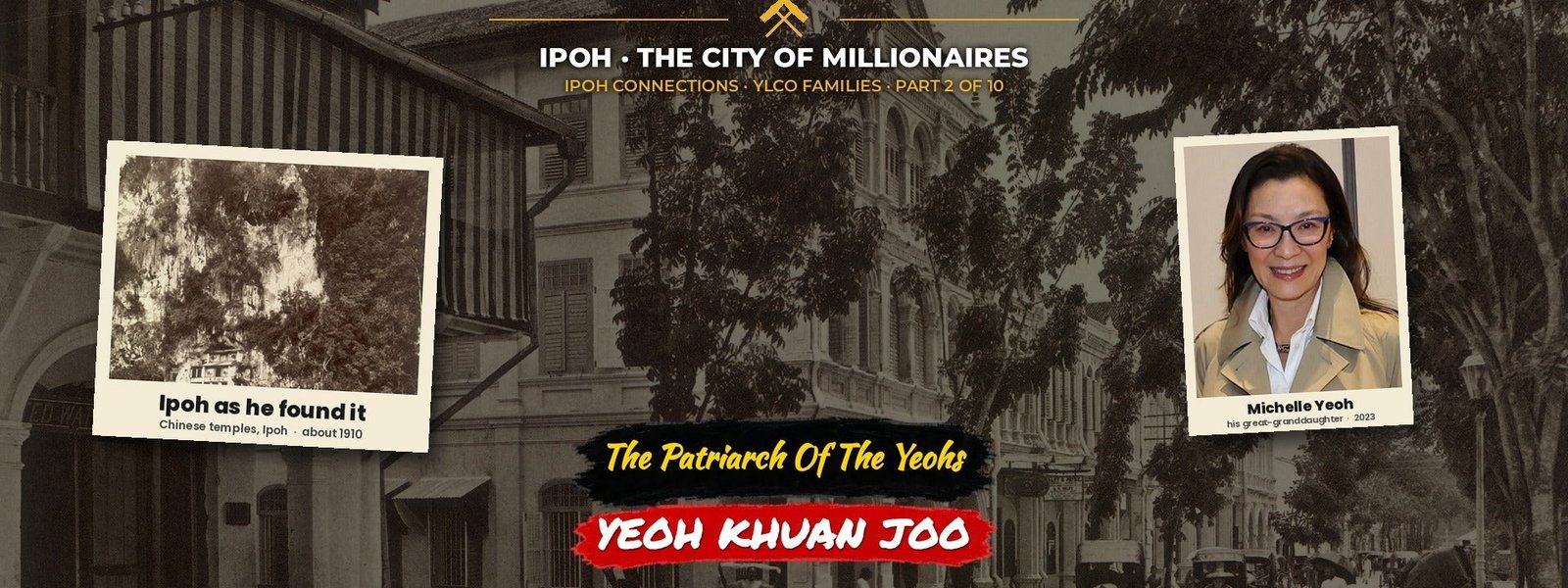
He ended up planning names for great-grandchildren he would never meet. One of them would carry an Oscar home to Ipoh.
If you learned to swim in Ipoh, there is a fair chance you did it at the Kinta Swimming Club. You probably never wondered who was behind it in the 1930s.
One of them was a textile merchant who, by his family's account, never needed to look at his books.
His name was Yeoh Khuan Joo. His is the first name on the wall of the YLCO Gallery of Families, The Living Archive (formerly the YLCO Museum), at No. 1 Jalan Lasam, Ipoh, since 2022, and his family tree reaches a Speaker of Singapore's Parliament, a bus company and, three generations on, an Oscar winner.
So how does a newcomer who started as a clerk become the root of a family like that?
Hold on to that question. We will come back to it.
Previously in Part 1: we met Ignatius Chew, the Ban Hoe Seng Honda man who turned his family's album into what is now the YLCO Gallery, at No. 1 Jalan Lasam, Greentown, since 2022. His mother was a Yeoh. Today, we meet her father.
WHO WAS YEOH KHUAN JOO?
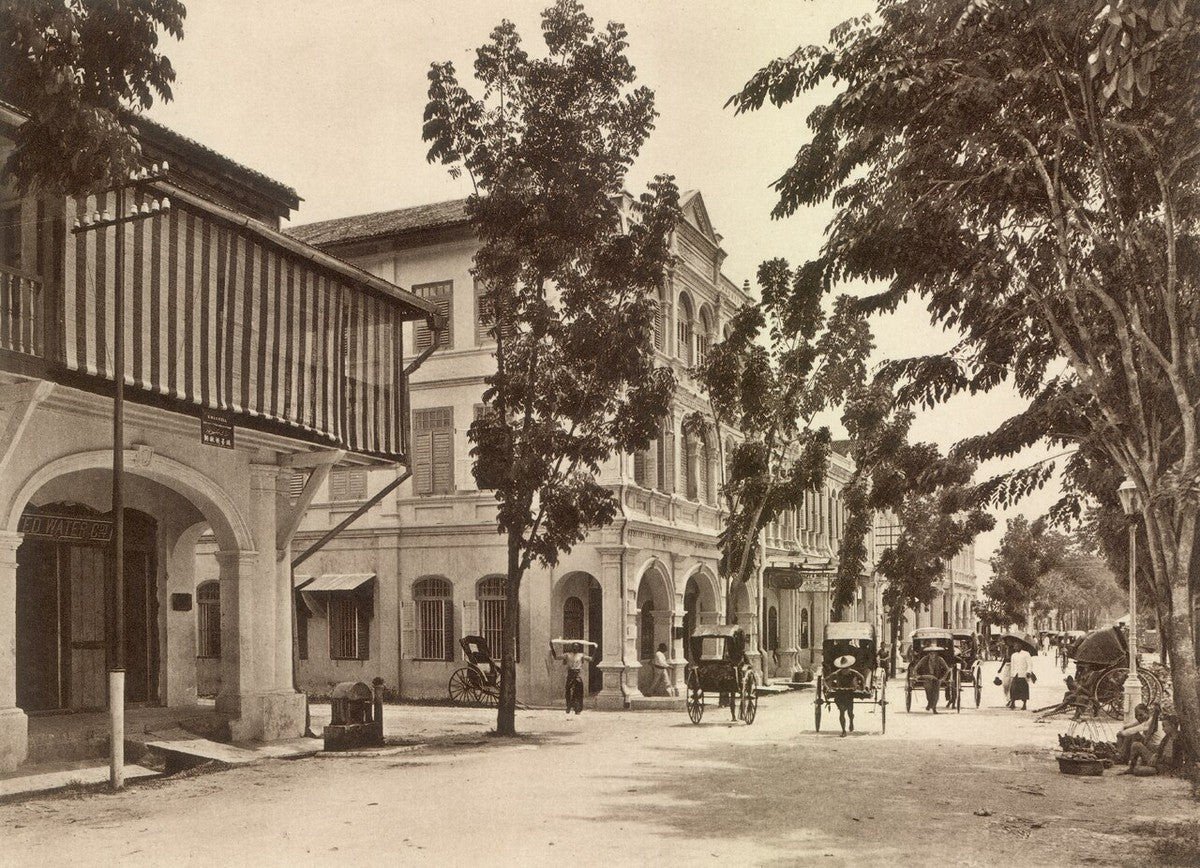
By the family's account, Yeoh Khuan Joo was born in 1872 in Tong An, in Fujian, China. The YLCO Gallery's panels date his arrival in Malaya to 1899. A family profile says he started as a clerk at a trading firm in Ipoh and, within a few years, had a rented shop of his own; family members remember him as a textile man.
THE MAN WHO DIDN'T NEED THE BOOKS
A member of the family told a local paper in 2019 that his memory was so good he could quote the cost price of every textile in his shop without looking at the books.
That is how a clerk becomes a merchant. Not with a fortune, but with a head for detail.
A NEWCOMER, NOT AN OWNER
It is worth sitting with how he started.
He was about 27 when he arrived, going by the family's birth year and the panels' date: not a tin towkay, but a clerk at someone else's desk. Ipoh was full of newcomers in those years. Most of their names are not on any wall.
What changed his story was not only the shop. It was a wedding.
THE BRIDE WHO ARRIVED IN 1900
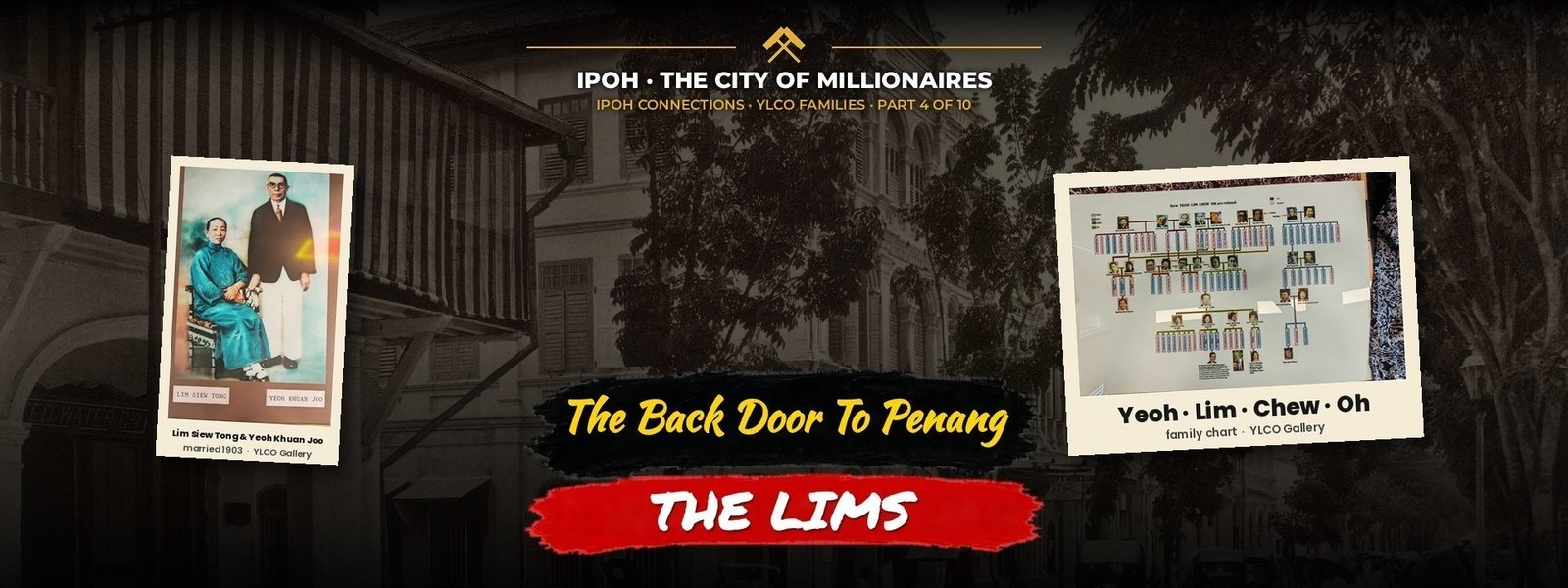
The panels list one more arrival after his: Lim Siew Tong, in 1900.
Then: "In 1903, Yeoh Khuan Joo married Lim Siew Tong."
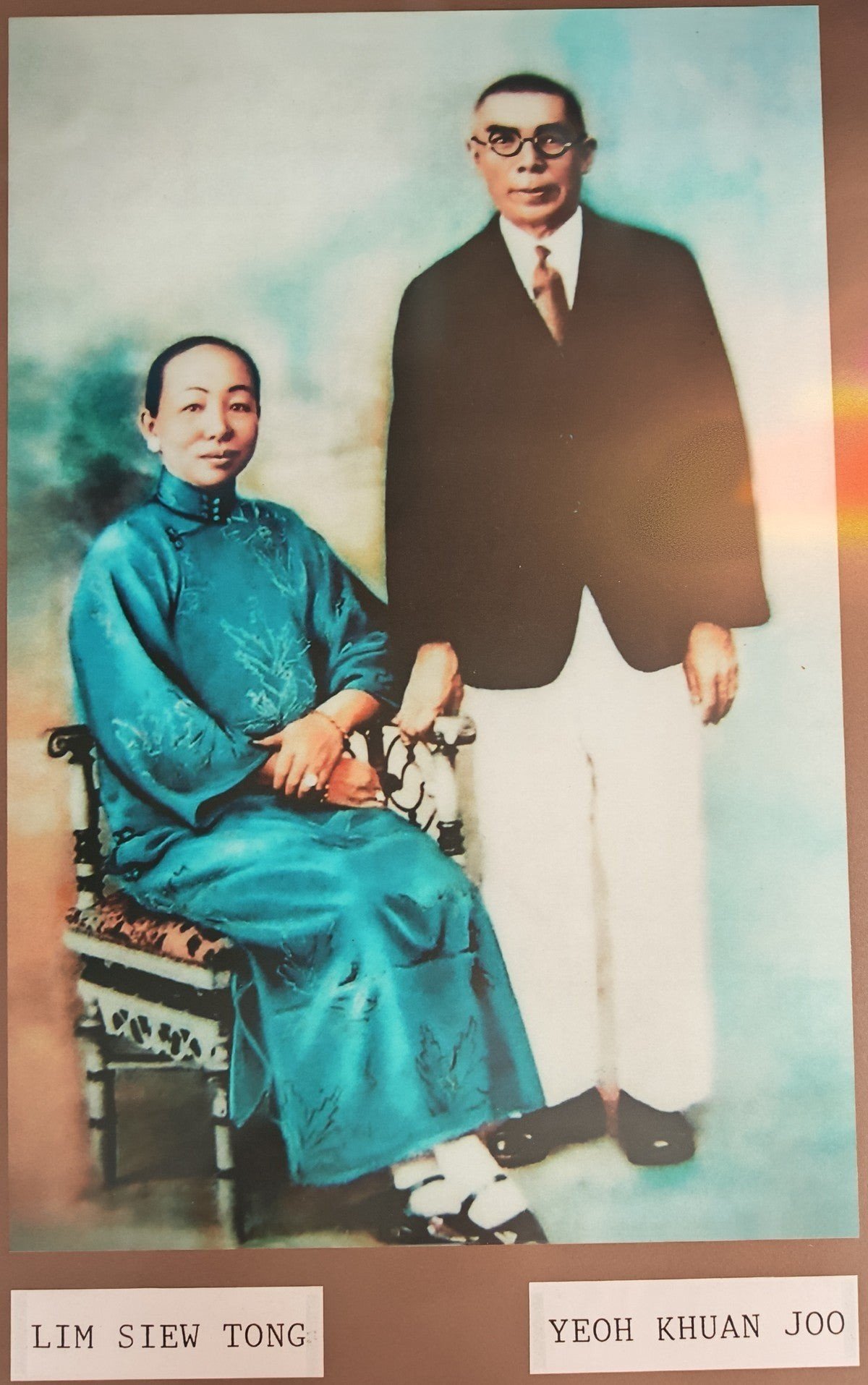
A local paper calls her the sister of Lim Seok Tan of Tapah. How her family came to Malaya is a story of its own, and a tense one. We will tell it in Part 4.
THE HOUSE OF FOUR WISDOMS
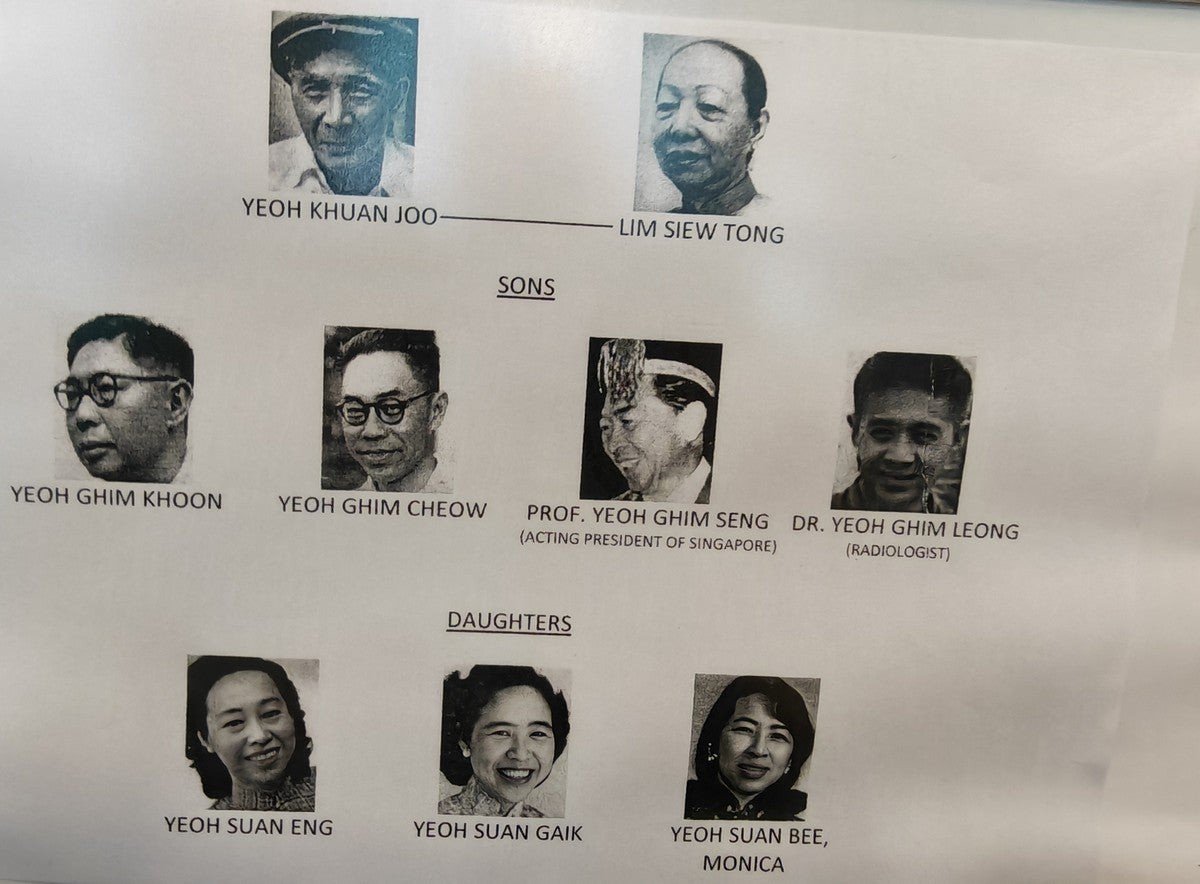
One of the gallery's panels shows "four brilliant sons of Yeoh Khuan Joo & Lim Siew Tong standing in front of their 'House of Four Wisdoms'".
The panels do not explain the name. But the sons, and a daughter, are not hard to find in the family's story:
- Yeoh Ghim Khoon, the eldest son. By a 2005 family profile, he founded the Ipoh Omnibus Company; by a 2010 profile, he was a founding member of Ipoh's town bus service in 1937.
- Professor Yeoh Ghim Seng, a surgeon who entered Singapore's Parliament unopposed in a 1966 by-election, became Speaker in 1970 and served three times as acting President of Singapore.
- Yeoh Ghim Cheow, whose wedding we will come to in Part 8.
- Monica Yeoh Suan Bee, a daughter, who married Chew Choon Kok in the 1940s, according to a local paper. Their son is Ignatius Chew.
A POOL FOR IPOH
Yeoh Khuan Joo also left his mark on a swimming pool. According to the Kinta Swimming Club and a local heritage history, he was among the Ipoh men behind the founding of the club in the early 1930s (the club gives 1931; the heritage history, 1933). The club's own site lists him as a founder, and his son Yeoh Ghim Khoon as a benefactor in 1946.

NAMES FOR PEOPLE HE WOULD NEVER MEET
Here is the detail that answers our question.
Yeoh Khuan Joo drew up a list of Chinese characters for his descendants' generation names, according to the family's blog. Generations later, his grandson's daughters were still following it: their father had asked that his grandchildren carry names from Yeoh Khuan Joo's list.
That grandson was Dato' Yeoh Kian Teik, the eldest son of the eldest son, Yeoh Ghim Khoon. And one of Kian Teik's children, born in Ipoh in 1962, was Michelle.
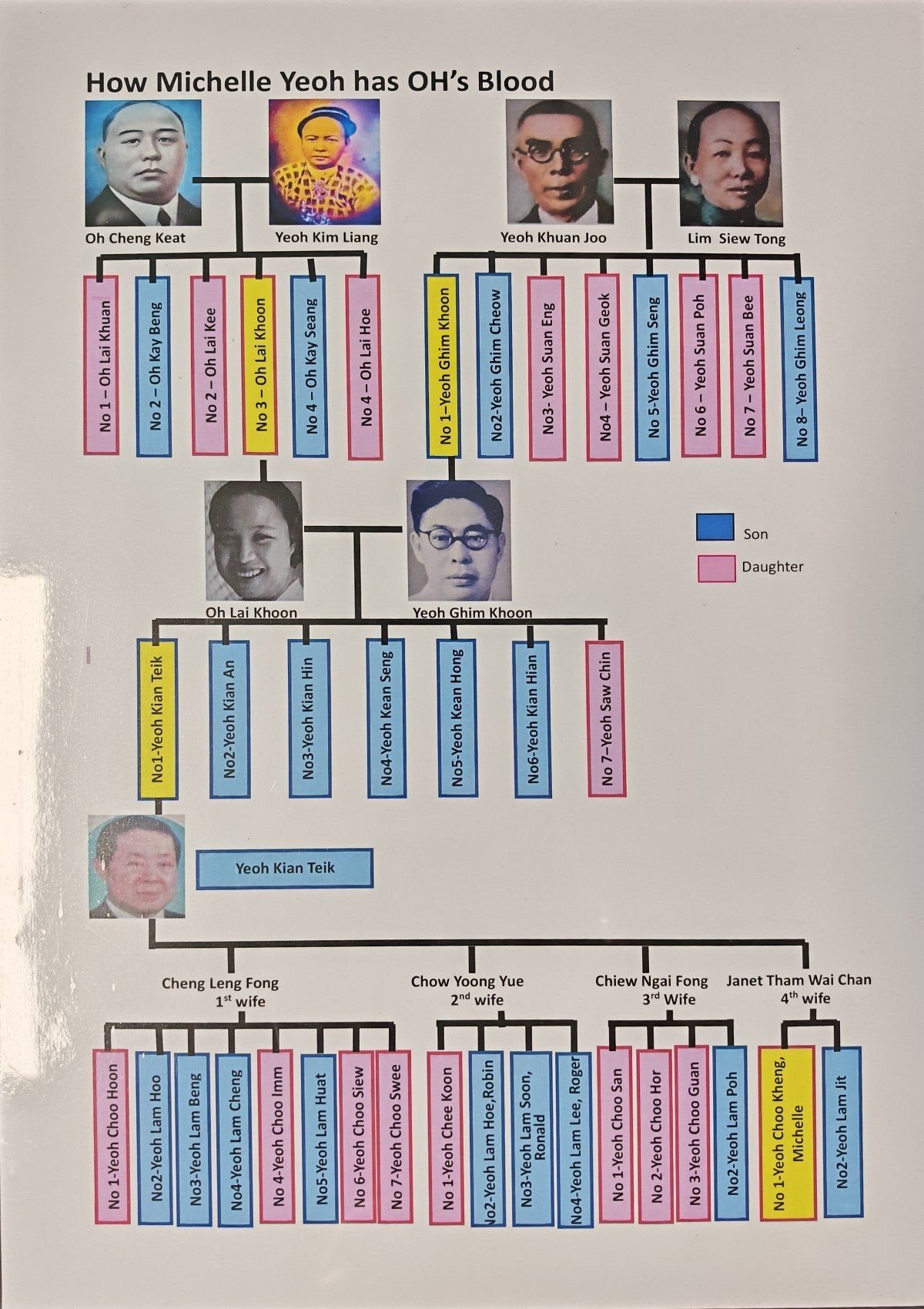
Their stories are Parts 9 and 10. For now, it is enough to know whose list they were named from.
SO HOW DOES A CLERK BECOME THE ROOT OF A FAMILY LIKE THIS?
Back to our question.
A memory for detail turned a clerk into a merchant. A wedding in 1903 joined him to the Lims. And a list of names turned a family into a line, one that his descendants still follow.
He did not just build a shop. He built for people he would never meet.
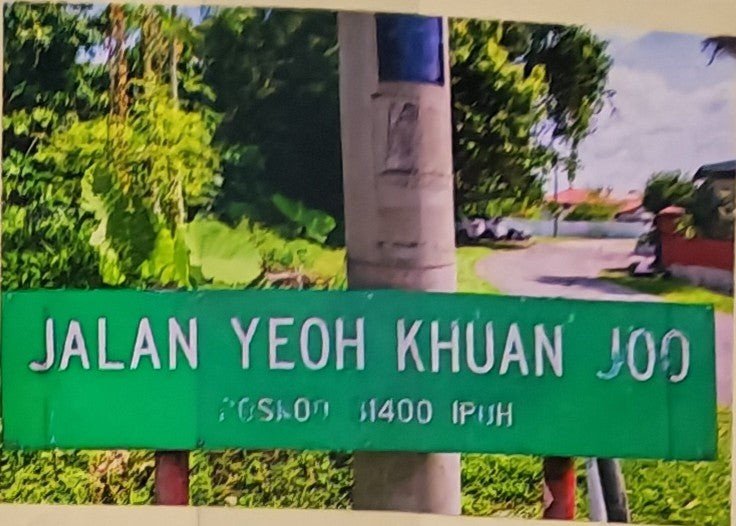
THE MILLIONAIRE LESSON
As the founder of Ipoh – The City of Millionaires, here is what I want every student, parent and young entrepreneur to take from Yeoh Khuan Joo.
First lesson: know your numbers.
He could quote the cost price of every textile without looking. In any business, the person who knows the numbers is the person who survives.
Second lesson: start where you are.
He began as a clerk. There is no shame in working at someone else's desk first. It is where you learn.
Third lesson: build for the long term.
A list of names for unborn great-grandchildren is the longest plan I can imagine. In my book, The You Economy, I wrote about how digital media was changing the way we do business. Platforms change. A family's values, handed down well, do not.
Does your family have generation names, or a tradition an ancestor started? Tell us
A clerk from Tong An, a shop in Ipoh and a list of names that outlived him.
Ipoh shaped their story. Whose story will Ipoh shape next?
NEXT IN YLCO FAMILIES: PART 3 OF 10, THE CHEWS
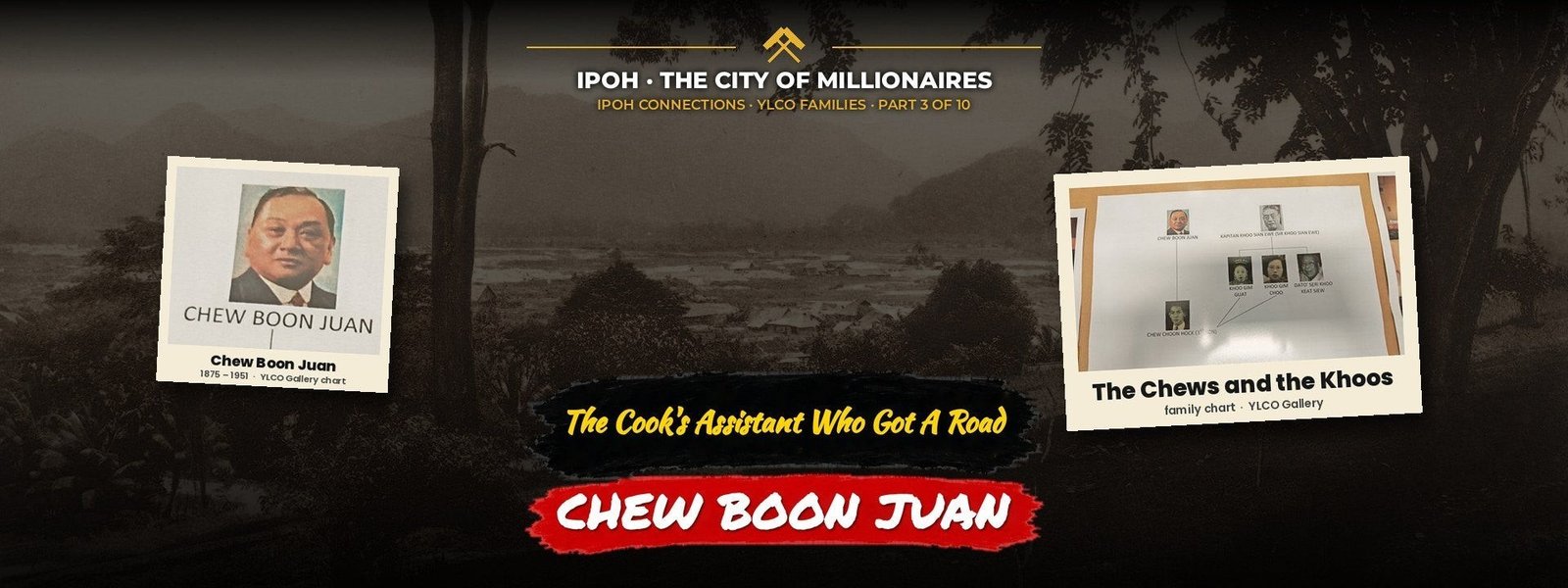
Next: a 17-year-old who started as a cook's assistant at a tin mine, an uncle saved from a shipwreck, a fortune teller's warning and four brothers. The story of Chew Boon Juan, and how a road came to bear his name.
A note on sources: This story is shared to the best of our knowledge and may not be accurate in every detail. Some of it comes from family accounts, gallery displays and personal recollections, which reflect the views of the people involved at that time and in that context. If you can add to it or correct it, we'd love to hear from you.
Sources: the YLCO Gallery's story panels; a local community newspaper in Ipoh; the Ban Hoe Seng family blog; the Kinta Swimming Club; family profiles from 2005 and 2010.
This story carries our Ipoh Connections label, for people whose stories run through Ipoh and Perak. It is part of Ipoh Stories, our City of Millionaires heritage series. At EdQuest International School in Ipoh, we believe history, character and critical thinking are best learned through real stories, including the stories of our own city.
Stories in this series are shared for informational and educational purposes. Where accounts differ, we say so. We respect all races, religions and cultures, and we do not represent or endorse any political party or movement.