DATUK LAT, THE KAMPUNG BOY CARTOONIST WHO LEARNED TO DRAW THE TOWN IN IPOH: NO JOB FOR HIM AS A CARTOONIST, SO HE KEPT DRAWING UNTIL A WHOLE COUNTRY SAW ITSELF
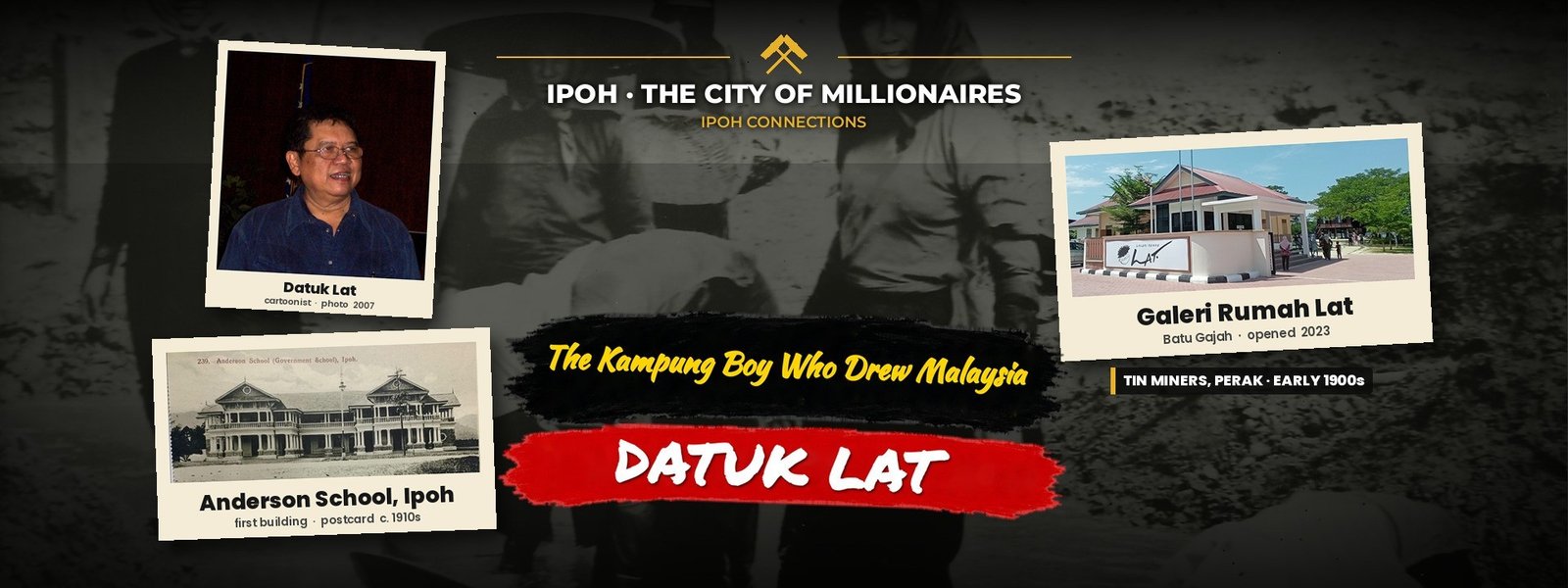
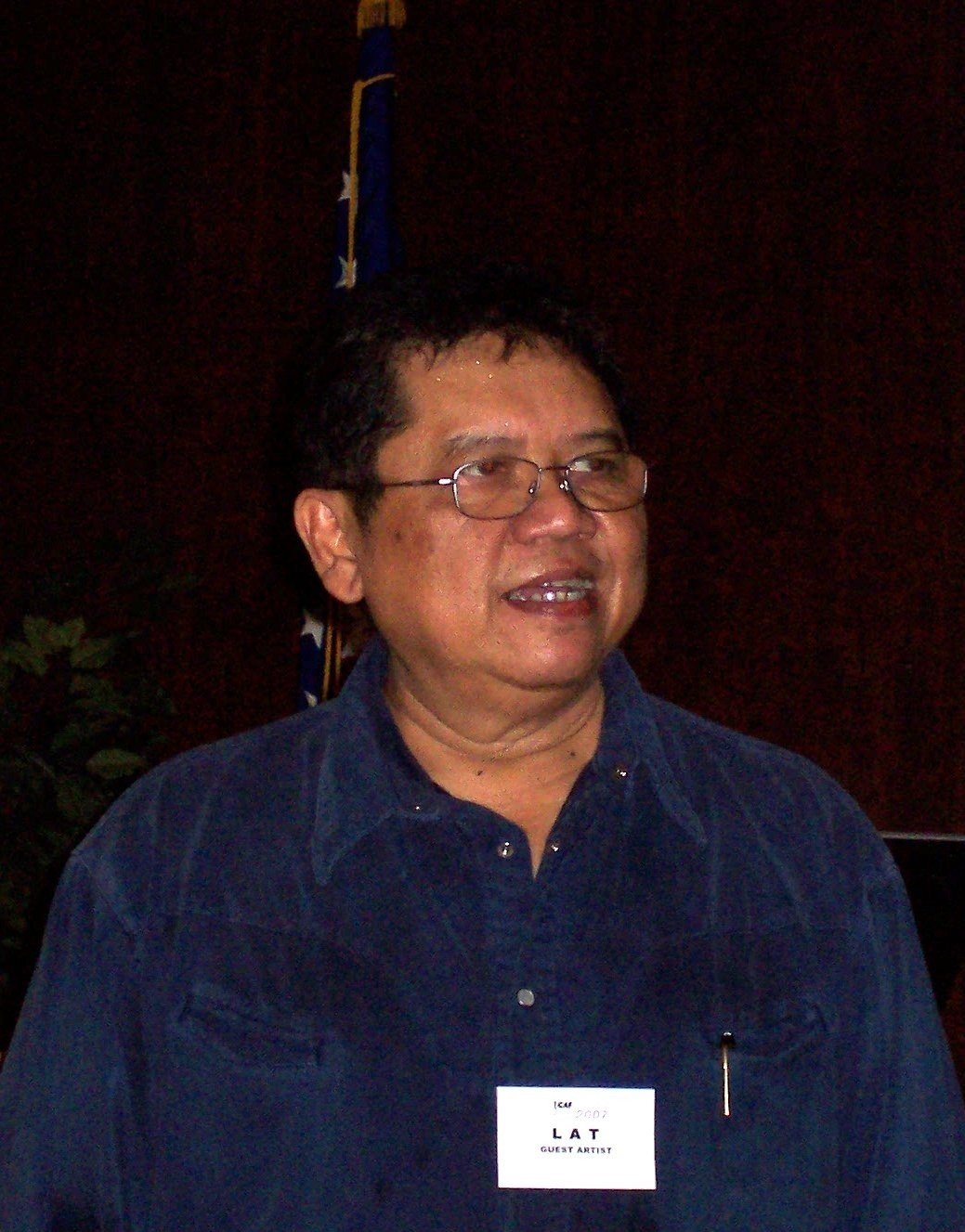
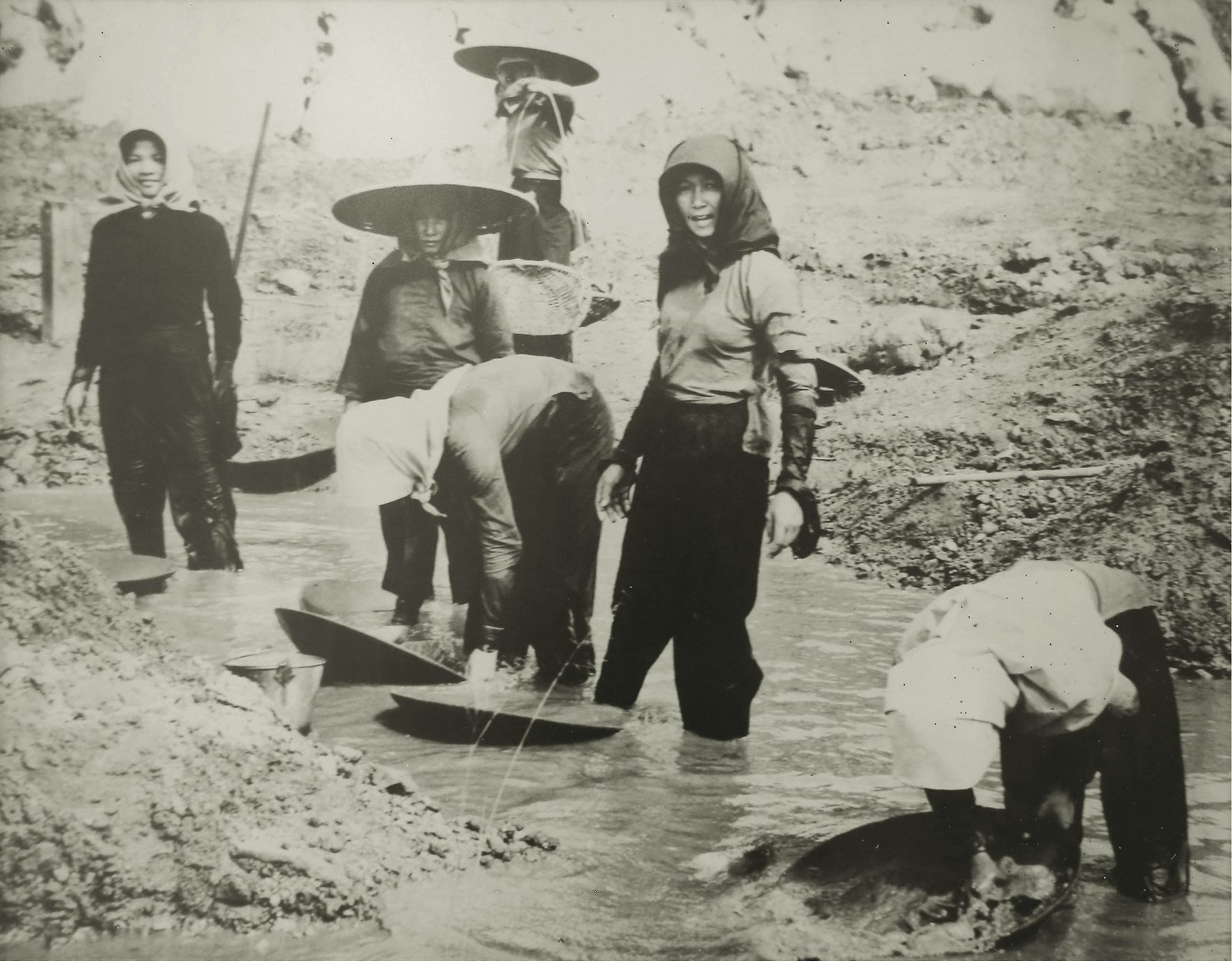
Cover: Datuk Lat, 2007 (photo: Mike Rhode, CC BY 2.0, via Wikimedia Commons); Anderson School (Government School), Ipoh, postcard, c. 1910–1920 (public domain, via Wikimedia Commons); Galeri Rumah Lat, Batu Gajah, 2023 (photo: Fandi89, CC BY-SA 4.0, via Wikimedia Commons). Background: women tin miners in Perak, early 20th century (photographer unknown, public domain, via Wikimedia Commons), darkened.
There was no vacancy for a cartoonist, so they made him a crime reporter. He drew anyway.
This is the story of a round-faced boy from a Perak kampung, the Ipoh school years that made him, and the house in Batu Gajah built to match his drawing.
You have sat in an old Ipoh kopitiam, ceiling fans turning slowly, a steamed pau on your plate and an old song drifting from somebody's radio.
Upstairs in a shophouse just like that, a Malay schoolboy and a Chinese schoolboy once sat together over their records, talking about pop music.
The Malay boy grew up to draw that afternoon. Then he drew the whole country, and Malaysians recognised themselves.
Who is Datuk Lat? Datuk Lat (Dato' Mohammad Nor Khalid, born 5 March 1951 in Kota Bharu, Gopeng, Perak, Malaysia) is the cartoonist of The Kampung Boy (1979) and Town Boy (1981). He went to school in Ipoh, Perak, Malaysia, including Anderson School, lives in Ipoh today, and was named Malaysia's ninth National Artist (Seniman Negara) on 13 November 2024, two years ago this week.
In short: the Kampung Boy became a Town Boy in Ipoh, and then a National Artist.
Here is the strange part. In 1979, he drew the wooden kampung house he grew up in. In 2023, a house built to match it opened for real, in Batu Gajah. On the day it opened, the Sultan of Perak gave him a royal title.
So how does a drawing become a house? And how did a boy whose exam results ended his schooling at Form Five get there?
Hold on to that question. We will come back to it.
A ROUND BOY CALLED "BULAT"
He was born Mohammad Nor Khalid on 5 March 1951, in Kampung Lalang, in Kota Bharu near Gopeng, Perak.
By his own account, the family drank well water, and at night the house was lit by kerosene lamps, because electricity had not arrived yet. He was a chubby, round-faced boy, so his family called him "bulat", Malay for round. His friends cut it to "Lat". The name stuck for life.
He was the eldest child. He played in the jungle, the plantations and the old tin mines around the kampung, and he doodled on whatever paper he could find.
Then the boy got his first ticket to town.
THE SCHOOLBOY WHO GOT PAID
In 1961, he passed the Special Malay Class examination and won a place at an English-medium school in Ipoh, the school at Pasir Puteh. His family soon followed him to the town.
At 11, he had his first design printed: the cover of his school magazine, Suara Pasir Puteh.
At 13, a publisher in Penang printed his first comic book, Tiga Sekawan (Three Friends). He was reportedly paid RM25, and the publisher reportedly had no idea the artist was a schoolboy.
For secondary school, he went to Anderson School, Ipoh, by then in the bigger campus it had moved to in 1931. Earlier in this series, we met A.B. Hubback, the architect who drew the school's first building, opened in 1909.
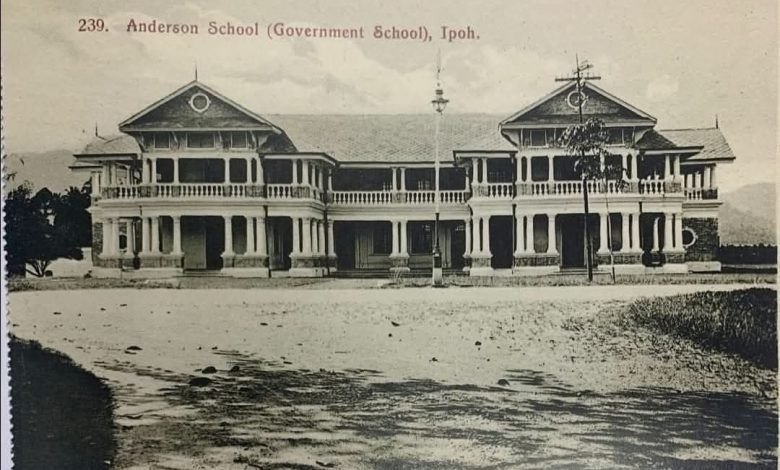
Still a schoolboy, he posted a set of six drawings to a Malay daily newspaper in Kuala Lumpur. By his own account, a letter came back from its editor, Abdul Samad Ismail, known to everyone as Pak Samad: "We accept."
In 1968, at 17, his comic strip Keluarga Si Mamat (Mamat's Family) began running every week in that paper's Sunday edition. It would run for 26 years. He later recalled that from Form 4 to Form 5 he was already earning more than RM100 a month from his drawings.
A schoolboy with a newspaper strip and a monthly income. What could go wrong?
The exam results.
THE RESULTS THAT CLOSED A DOOR
By most accounts, at the end of Form Five, his grades in the Senior Cambridge examination were not good enough to go on to Form Six. His school days were over.
He went to Kuala Lumpur and asked Pak Samad's paper for a job as a cartoonist. There was no vacancy, the story goes. What the paper could offer was a job as a crime reporter.
He took it. His father had fallen seriously ill, and the family needed his pay. "It was a question of survival," he later said.
So in 1969, the boy who wanted to draw was chasing ambulances and fire engines around Kuala Lumpur at night. He tells one story against himself: he once followed a speeding ambulance all the way to the hospital, hoping for a scoop, and it pulled up at the maternity ward.
"In my time when I first came to Kuala Lumpur, there was very little pay and I had to struggle," he told an interviewer in 1994. When he went home to Ipoh or the kampung, people assumed he was living a glamorous city life.
It got worse before it got better.
THE LETTER HIS EDITOR REFUSED
According to accounts of his early career, his crime reports were too vivid and too gory, and his seniors kept toning them down. He decided he was a failure as a reporter and handed in his resignation.
His editor, Samad, reportedly refused to accept it. He believed the young man had a future in newspapers.
He was right, but not in the way anyone expected. The answer came from Hong Kong.
ONE CARTOON ABOUT A CIRCUMCISION
In 1974, a Hong Kong-based magazine published his cartoon strip Bersunat, a gentle, funny look at the circumcision ceremony that Malay Muslim boys go through.
By then he had moved to the group's English-language daily, still on the crime beat. The strip caught the eye of its editor-in-chief, Tan Sri Lee Siew Yee. The story goes that he asked why the paper had not hired this artist, and was told the artist already worked for the company, as a crime reporter.
That same year, the paper made him its column cartoonist, and his strip Scenes of Malaysian Life was born. The paper sent him to St Martin's School of Art in London for four months, and from 1975 he drew full time, with a free hand. The Fukuoka Asian Culture Prize citation later called him Malaysia's first full-time newspaper cartoonist.
The crime reporter had found his beat. Now he needed a story only he could tell.
THE BOY WHO DREW HIS OWN KAMPUNG
In 1979, he published The Kampung Boy, his own childhood in Kampung Lalang, drawn in pen and ink: the wooden house, the river swims, the bersunat, the day he panned for tin in a mine and got punished for it, and the morning he left for school in Ipoh.
By his own account, the first printing of 60,000 to 70,000 copies sold out within four months. It has since been published in other languages, including Portuguese, French and Japanese.
In 1981 came Town Boy, about his teenage years in Ipoh. The boy goes to Anderson School and becomes best friends with Frankie, a Chinese boy whose family runs a coffee shop with their home upstairs. They bond over records and pop music. At the end, the boy rushes to Ipoh Railway Station to say goodbye as Frankie leaves to study in England, the very station we explored earlier in this series in the railway that made Ipoh rich.
Was Frankie real? In that 1994 interview, Lat would not say whether that was the boy's real name. But he did remember climbing up to a house above a coffee shop around Standard 6, and he said music made them friends. "Even politicians cannot tell two boys you must be friends," he said. "But because of music, because of art, you know, you become friends."
His drawings had made him famous. Now he had to decide whether to bet on himself.
THE DAY HE BET ON HIMSELF
In 1984, he left his staff job to go freelance, while still drawing Scenes of Malaysian Life for the paper. He set up his own company, Kampung Boy Sdn Bhd, to handle his books and characters.
It was a real risk. "I was one of the first to go out on my own," he said in 1994, "and yeah, there were actually some days I was worried because at that time I have a child." No more company benefits. "There's freedom," he said. "But at the same time there are more responsibilities."
The bet paid off. In 1994, at 43, he received the Dato' Paduka Mahkota Perak, and the title Datuk, from the Sultan of Perak. In 1997, after more than 25 years in Kuala Lumpur, he came home, to Ipoh. That same year, the Kampung Boy reached television in an animated pilot, and a full series followed in 1999. In 2002, he won the Fukuoka Asian Culture Prize in Japan.
Which brings us back to that house.
SO, HOW DOES A DRAWING BECOME A HOUSE?
Back to our question.
Lat says the idea came from Sultan Nazrin Shah himself, when he was still the Raja Muda (crown prince) of Perak: it would be wonderful, the prince told him, to have all his artworks in one gallery. After talks with the state government, they settled on Batu Gajah, about 30 minutes from his old kampung.
The result is Galeri Rumah Lat, on Jalan Bemban, Batu Gajah, Perak. Beside the gallery stands a traditional Perak-style wooden house, a rumah limas, built to match the house in The Kampung Boy. Federal funds paid for the gallery, and the Perak State Museum Board runs it. Much of what is inside came from his own family, donated by his brothers and sisters.
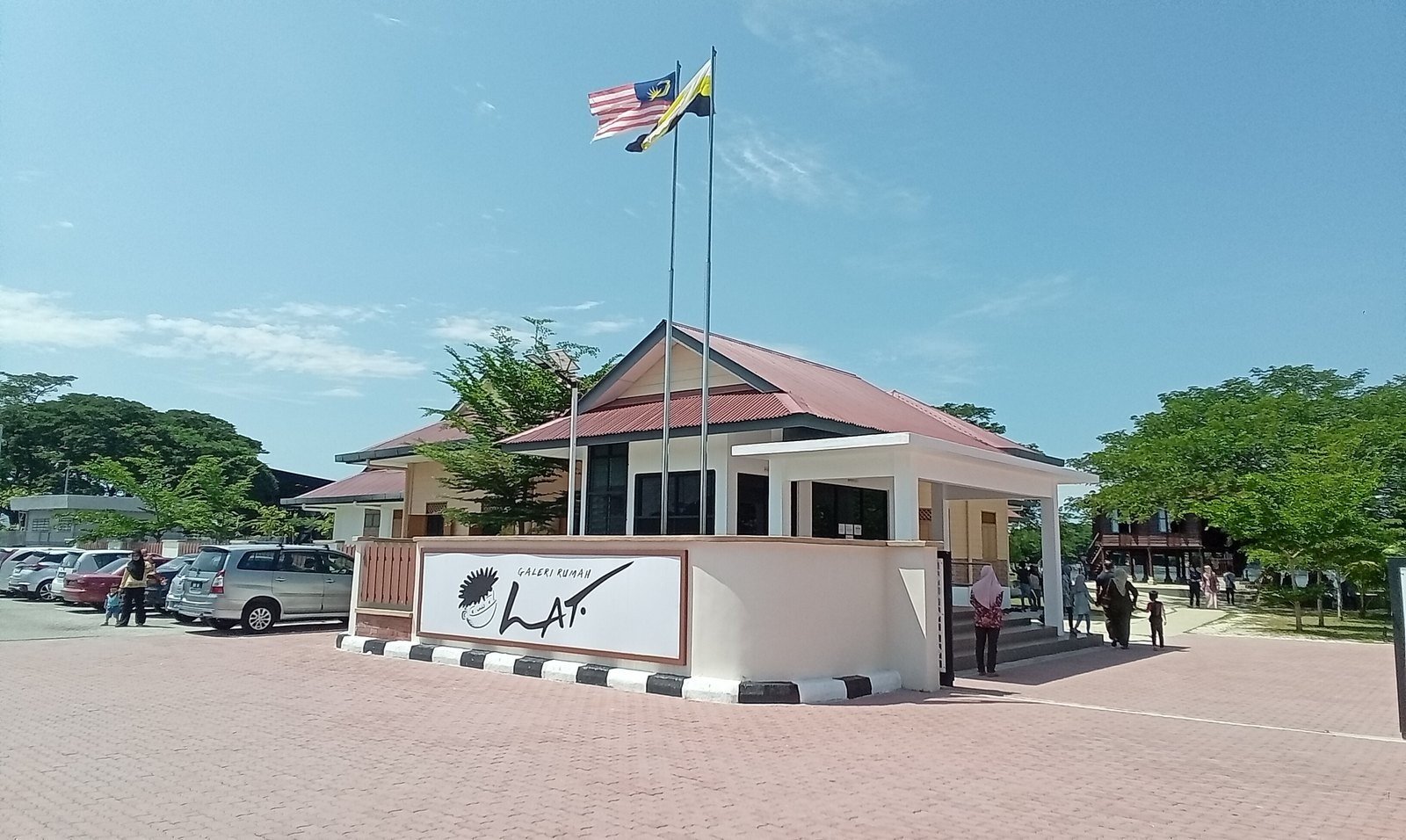
On 8 July 2023, Sultan Nazrin Muizzuddin Shah opened it and, at the ceremony, named Lat a Seniman Diraja (Royal Artist), the first cartoonist in Perak to receive the honour. "When Sultan Nazrin announced it, I was in disbelief but felt happy," Lat said.
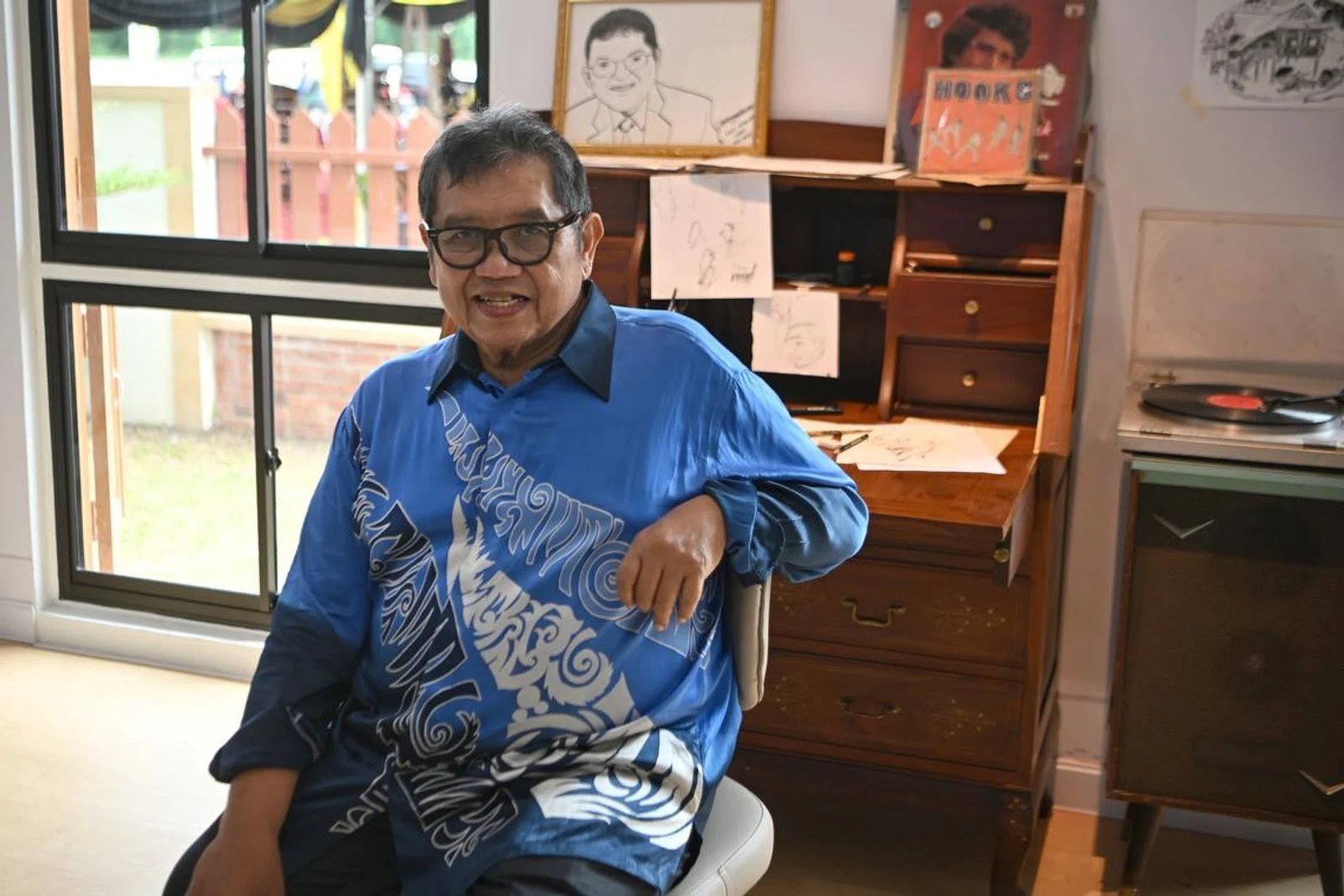
Sixteen months later, on 13 November 2024, Raja Permaisuri Agong Raja Zarith Sofiah presented him with the ninth Anugerah Seniman Negara, the National Artist award. After 60 years in cartoons, he said he hoped the award would encourage today's and tomorrow's young artists in drawing, cartooning and writing, because, in his words, those fields matter to the nation too (translated from Malay).

So that is the answer. A drawing becomes a house when someone draws what he knows, honestly, for 60 years, until the drawing is worth more than the wood it was made of.
The boy whose exam results stopped him at Form Five did not get there by skipping the setback. He took the job that was open, kept drawing on the side, and waited for his work to find its audience.
THE MILLIONAIRE LESSON
As the founder of Ipoh – The City of Millionaires, here is what I want every student, parent and young entrepreneur to take from Datuk Lat.
There was no job for him as a cartoonist, so he took the job there was and never stopped drawing.
Your exam results can close a door. They cannot take away what you do every day when nobody is paying you to do it.
Did you grow up reading The Kampung Boy or Town Boy? Which scene was your life? Tell us
He drew the kampung and he drew the town, and Ipoh gave him both. Ipoh shaped their story. Whose story will Ipoh shape next?
This story carries our Ipoh Connections label, for people who were not born in Ipoh but whose life or work has a real tie to the city. It is part of Ipoh Stories, our City of Millionaires heritage series. At Rochford's International School in Ipoh, we believe history, character and critical thinking are best learned through real stories, including the stories of our own city.
Stories in this series are shared for informational and educational purposes. Where accounts differ, we say so. We respect all races, religions and cultures, and we do not represent or endorse any political party or movement.