The Murukku: Every Deepavali, My Thatha Made Me Roll Murukku for Hours. The Shop Sold It Cheaper
💛 Lessons From Our Parents
For three Deepavalis, I sat on my grandfather's kitchen floor while my cousins played outside.
All he ever said to me was, "Again. Thinner."
By Rochford's International School
In many Malaysian homes, Deepavali begins in the kitchen, days before the first oil lamp is lit.
This is a story about a grandfather, a grandson and a brass murukku press. It is told in the voice of a grown grandson, looking back. It is not about any one family. It could be about any of us.
What is Lessons From Our Parents? Lessons From Our Parents is a series of short parenting stories from Rochford's International School in Ipoh, Perak, Malaysia. Each one is a simple story with a turn at the end, and a small, practical lesson for the families in our community.
THE HOUSE IN OLD TOWN
My thatha lived in a narrow old house in Ipoh Old Town, the kind with wooden shutters and a kitchen at the very back that never got any breeze.
Every year, the week before Deepavali, Appa dropped me there at eight in the morning with a plastic bag of clothes.
"Help your Thatha," he said, and drove off to work.
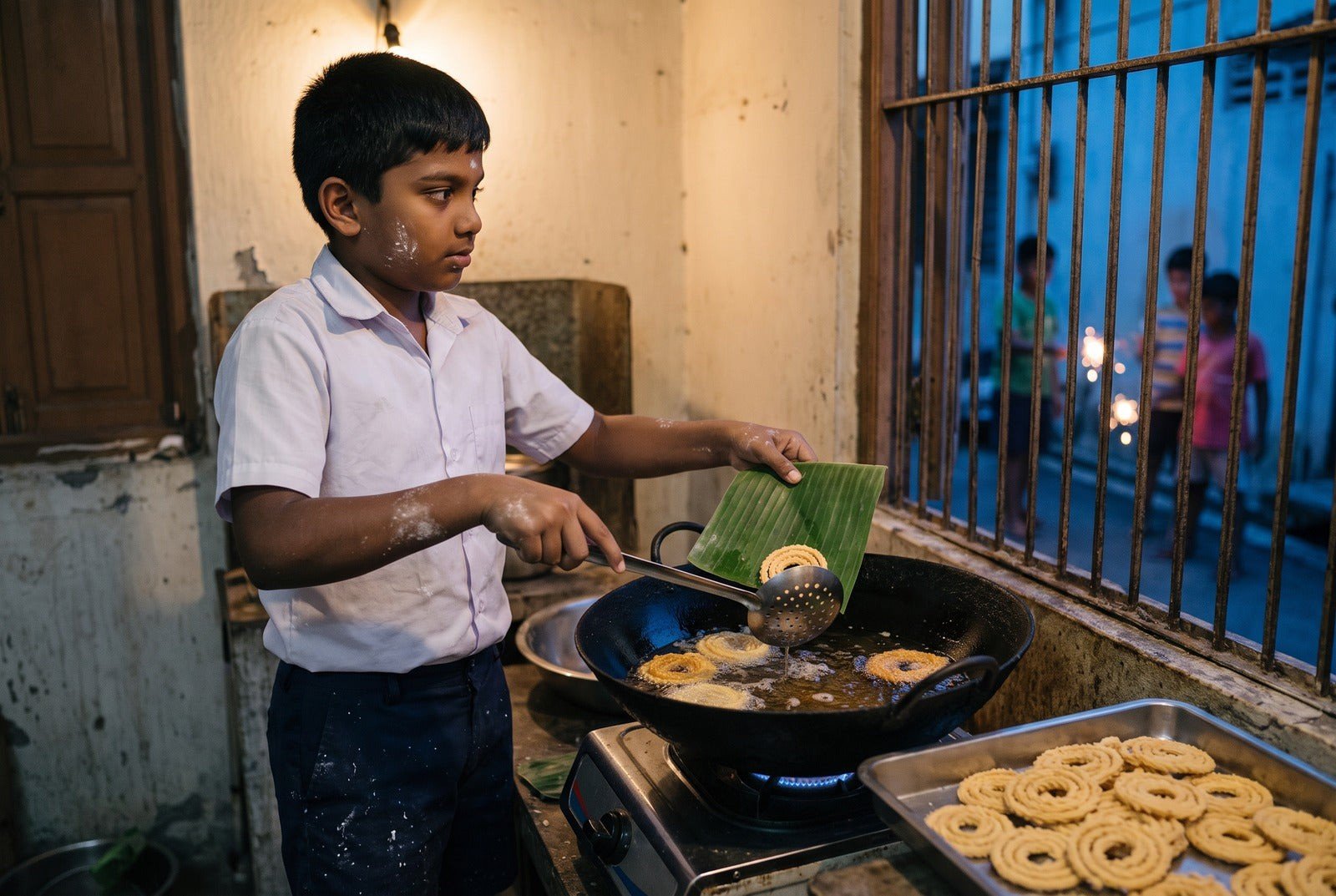
My cousins were dropped off too, and sent to the back lane to play. Badminton with no net. Sparklers when it got dark.
I was the one Thatha called into the kitchen.
I was twelve the first year. I asked him why it had to be me.
He said, "Because your hands are ready."
I looked at my hands. They looked like ordinary hands to me.
THE PRESS
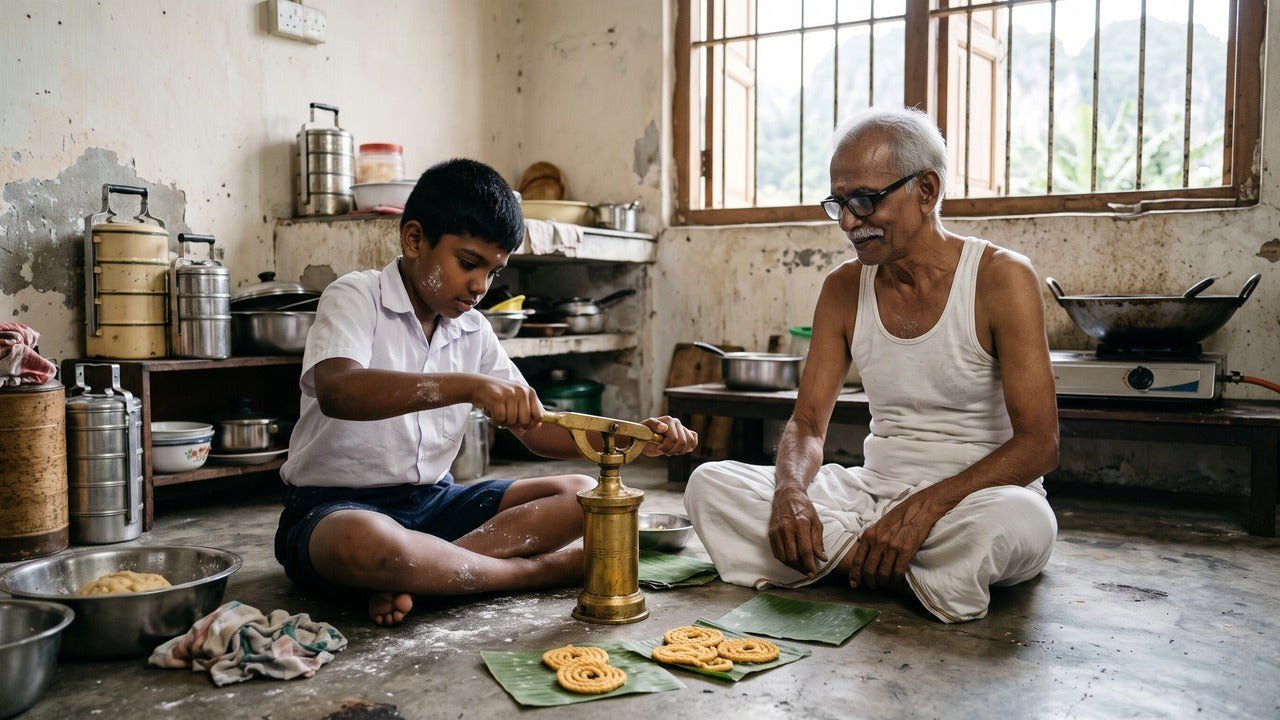
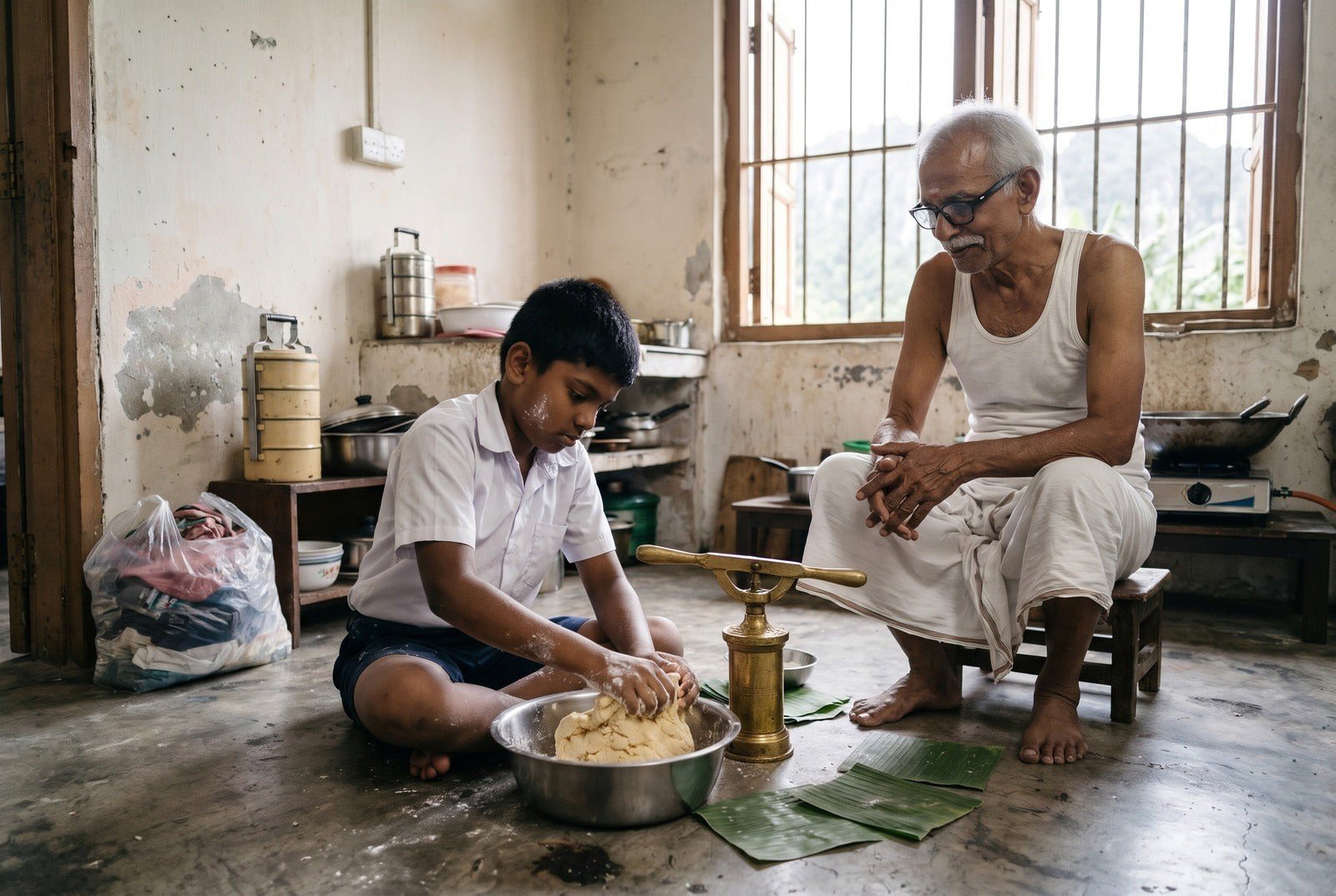
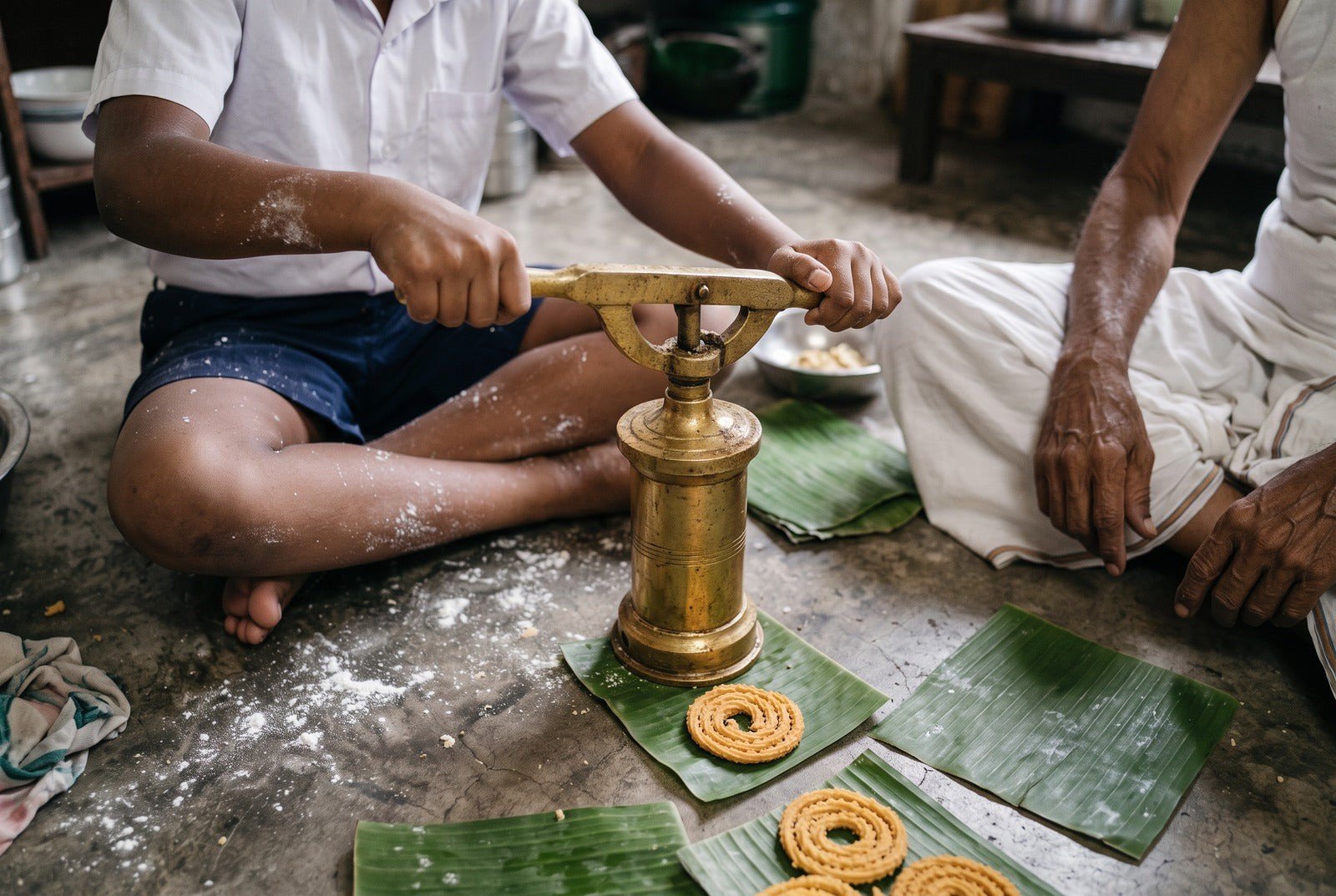
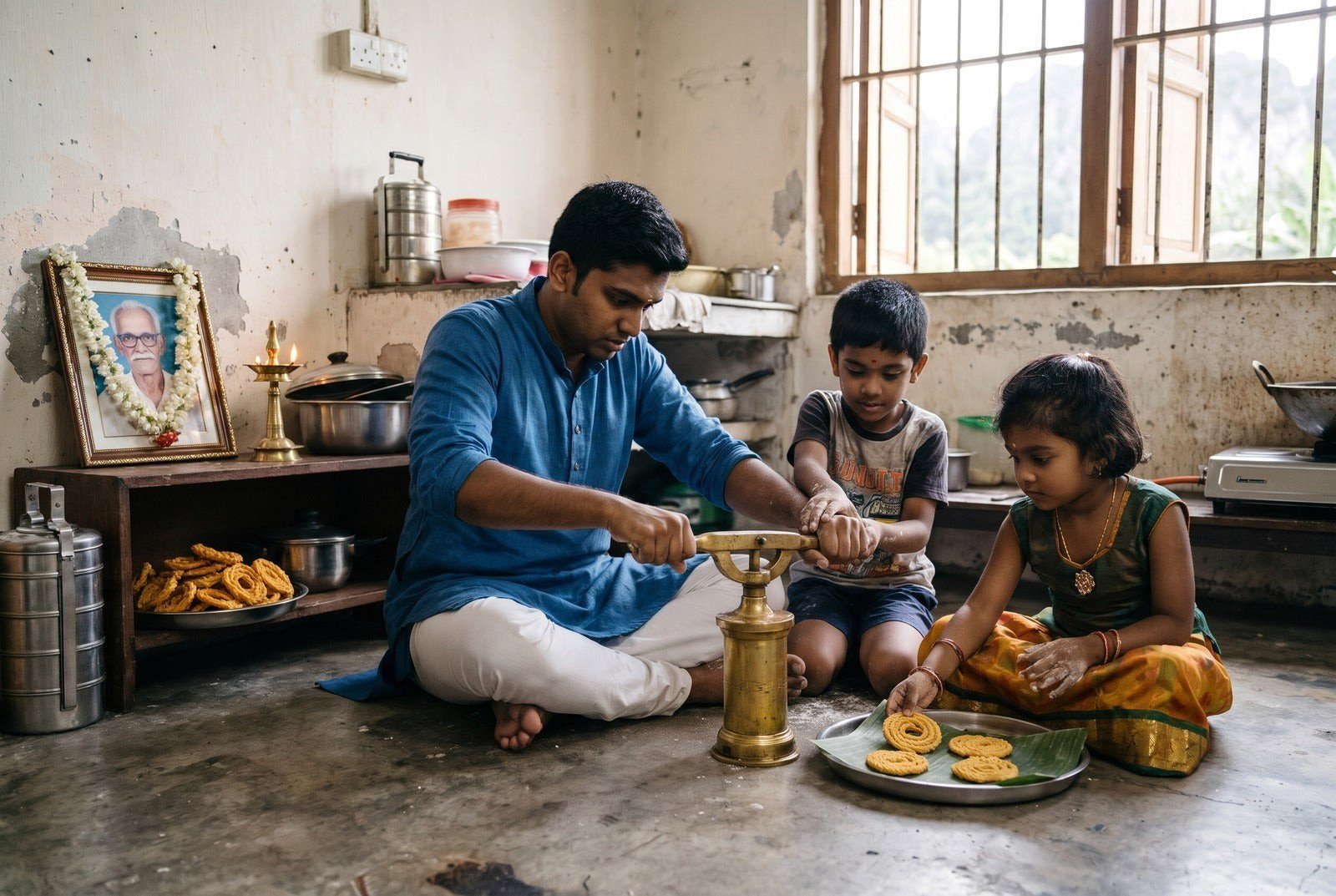
The murukku press was brass, dark at the edges. It had belonged to Thatha's own mother. It was heavier than it looked, and after an hour my palms were red.
I sat on the cement floor under a ceiling fan that had never worked in my whole life.
Thatha sat on a low wooden stool beside me in his white veshti. He smelled of Old Spice and coffee.
I pressed the dough into spirals on squares of banana leaf. When a tray was full, I carried it to the big black kuali myself, and the oil spat and once caught me on the wrist.
By lunchtime, there was rice flour all over my school shorts.
Thatha didn't press a single one. Every few minutes he leaned over, looked at my spiral, and said the same two words.
"Again. Thinner."
RM15 A TIN
The sundry shop at the end of Thatha's road sold murukku in big round tins. RM15 a tin. I checked.
"Thatha, the shop sells it," I told him, the first year. "It's cheaper than all this flour. And it's faster."
"Again," he said. "Thinner."
The second year, I told him Kannan's mother just bought hers. Kannan was outside right then, lighting sparklers.
"Thinner," said Thatha.
He never explained. He sat on that stool with his hands folded in his veshti, like a king who had found someone else to do his work.
When the neighbours came on Deepavali morning to collect their containers, they always said the same thing. "Aiyo, Thatha, your murukku is the best on the road."
And Thatha would smile, and look at me, and say nothing.
I thought he was taking the credit.
ONE MORE YEAR
The third year, I was fourteen, and I had had enough.
I put the press down on the floor, hard. "I'm not coming next year. You can buy it from the shop like everyone else."
The kitchen went quiet. Even the oil seemed to stop spitting.
Thatha didn't shout. He looked at me for a long time. Then he pushed his hands deeper into the folds of his veshti and said, very quietly, "One more year, kanna. Just one more."
I rolled my eyes and finished the batch without speaking to him.
I didn't know it was the last Deepavali he would sit on that stool.
THE RECIPE NOBODY HAD
In March, Thatha had a stroke.
He came home in a wheelchair. His right side didn't work any more, and his words came out slowly.
That October, the family gathered at the old house, and somebody asked the question nobody had thought to ask.
"Who has Thatha's murukku recipe?"
Nobody had it. It had never been written down, not even on the back of an envelope.
My aunty's dough cracked in the press. My mother's came out thick and pale.
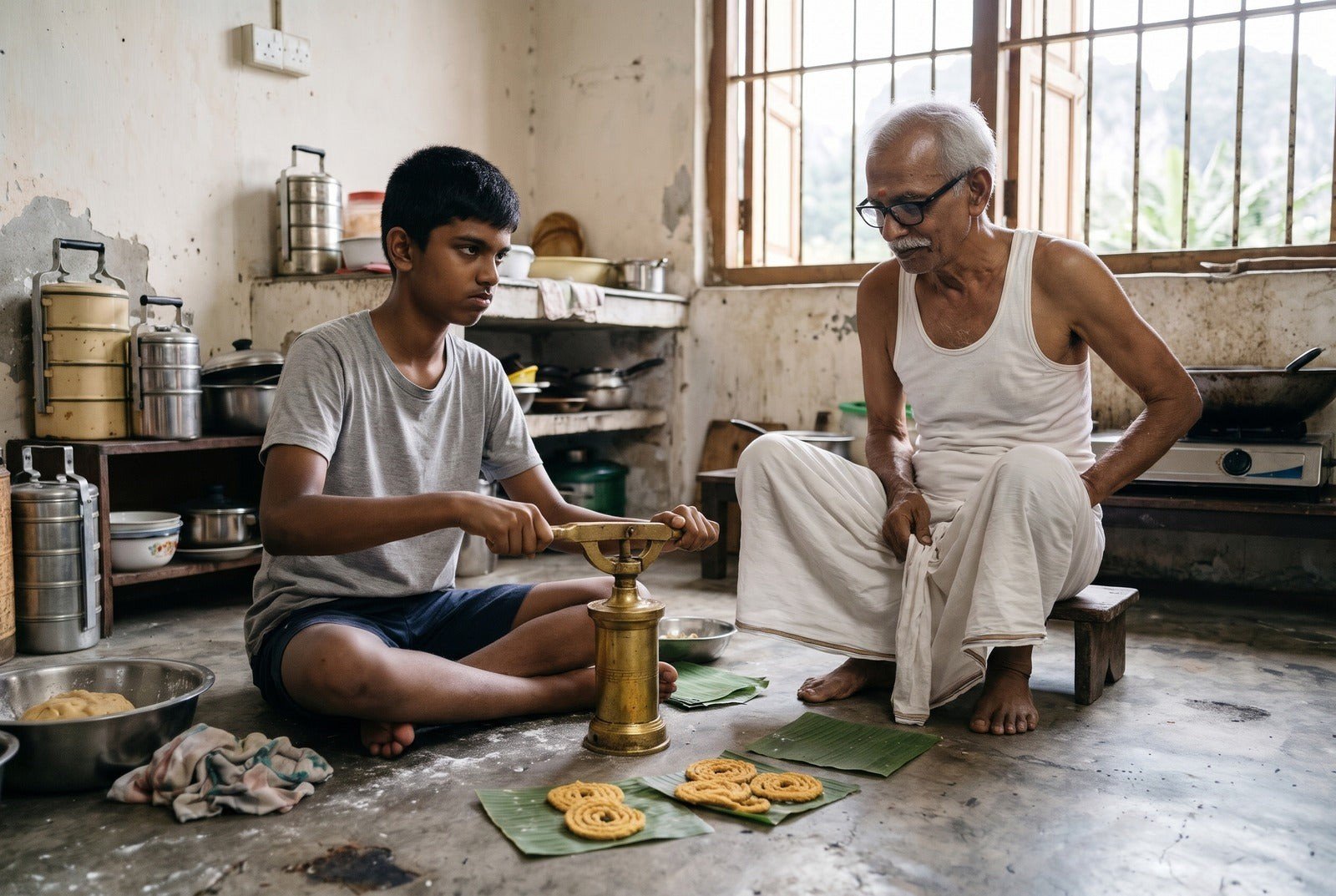
So I sat down on the cement floor.
And my hands just knew. How much butter. How much sesame and cumin. How the dough should feel, soft like an earlobe. How thin.
I didn't think about it once. My hands had done it a thousand times.
Thatha was in his wheelchair in the doorway, watching. He didn't say "thinner." He didn't need to.
WHAT APPA TOLD ME
That night, Appa sat on the floor beside me while I wiped the brass press clean.
"Do you know why he chose you?" he asked.
I said I didn't know. He shook his head.
"His hands started shaking three years ago, kanna. The doctor said it would only get worse. He couldn't hold the press. He couldn't hold his coffee without spilling it."
I stopped what I was doing.
"Forty years, the whole road ate his murukku. He was ashamed. So he sat on his hands and said 'thinner,' so you would keep going, and nobody would notice you were doing all of it."
All the neighbours. All the containers. "The best on the road."
Every single piece, for three years, had been mine.
And every time he smiled at me on Deepavali morning, he wasn't taking the credit.
He was giving it to me, and he couldn't say so.
"He told me once," Appa said, "the others would play and forget. Vikram will complain, and remember."
THE LAST PLATE
The next morning, I took the first plate of murukku to Thatha.
He held one piece in his good hand and chewed it for a long time.
Then he looked at me with half a smile, and with the half of his mouth that still worked, he said, "Thinner."
We both laughed. Then we both cried. In the doorway, Appa pretended he was busy with his phone.
He passed away the year after.
He wasn't teaching me to make murukku. He was handing me Deepavali before his hands let go of it.
THIS YEAR
I'm twenty-four now and I live in KL. Every year, the week before Deepavali, I drive back to the old house in Old Town.
The ceiling fan still doesn't work. The kuali still spits. And now my little cousins sit on the cement floor beside me, complaining that the shop sells it cheaper.
I just say, "Again. Thinner."
This year I'll make the murukku. I'll set aside one plate for him, just like I always do.
THE LESSON FOR PARENTS
At Rochford's International School, we often see children kept busy beside the real work of a family, but rarely given a share of it. It is quicker to do it ourselves, or buy it from the shop.
But the things that matter most in a family are rarely written down. They live in hands, and pass from one pair to the next, usually while someone is complaining.
Give children real work beside you, because that is how the things that matter get passed on.
Here are a few simple ways to start at home this Deepavali, or at any festival:
- Give them the real job, not the pretend one. Let them press the murukku, weave the ketupat or wrap the dumplings. Children know when their work counts.
- Work beside them, and talk less. An afternoon side by side teaches more than any explanation.
- Bring the grandparents in. Ask them to teach one thing with their hands. The recipe in their head will not be there forever.
- One day, tell them why. Don't leave it for someone else to explain.
The shop will always sell it cheaper.
But it will never sell you the hands that made it.
Our parents shaped our story. Which lesson will our children carry next?
What did your grandparents teach you with their hands? Tell us below 👇
💛 Share this with someone who is making murukku this weekend.
Lessons From Our Parents is a series from Rochford's International School for the families in our community. Each story is a simple parable, not an account of any real family, shared to start a conversation about raising confident, resilient children. Read more in the series, The School Bag, The Report Card and The Rice Pot, and more stories from our city in Ipoh Stories.
Rochford's International School by Rochford's Education, Ipoh, Perak, Malaysia.