The Rice Pot: When I Was Nine, My Mother Stopped Cooking for Me. Sixteen Years Later, I Found Out Why
Lessons From Our Parents
For a whole year, my mother stood by the stove with her arms folded while I burnt my own dinners.
My friends went home to hot food. I went home to "try again tomorrow."
By Rochford's International School
Some parents do everything for their children.
Some stand back and watch them struggle, and it looks, from the outside, a lot like not caring.
This is a story about a mother who stood back. It is told in the voice of a grown daughter, looking back. It is not about any one family. It could be about any of us.
What is Lessons From Our Parents? Lessons From Our Parents is a series of short parenting stories from Rochford's International School in Ipoh, Perak, Malaysia. Each one is a simple story with a turn at the end, and a small, practical lesson for the families in our community.
THE KITCHEN
Our kitchen in Falim was small and always warm.
Mum cooked everything. Devil curry at Christmas. Sambal that made Dad's eyes water. On ordinary nights, rice, an egg, some kangkung, and the radio playing old English songs while she stirred.
I never lifted a finger. I didn't need to. Dinner just appeared, the way the sun did.
Then, the year I turned nine, it stopped.
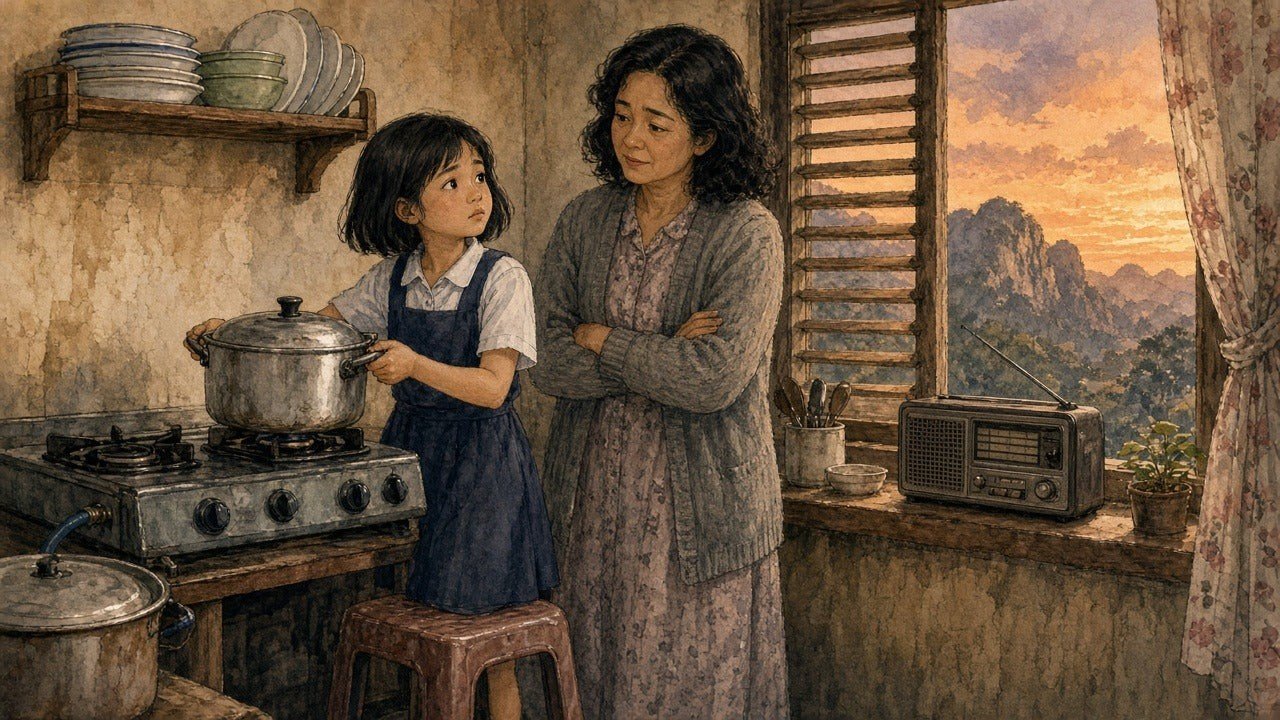
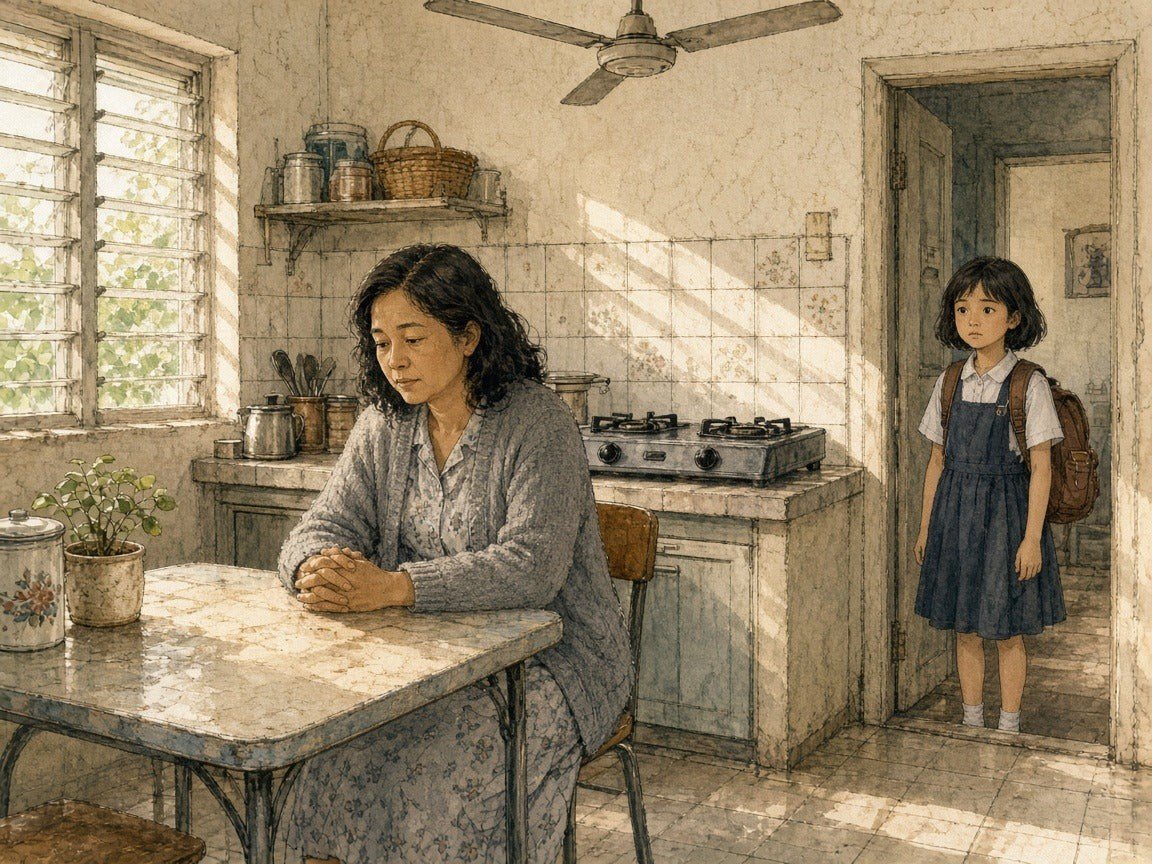
I came home from school one afternoon in March and the stove was cold. Mum was sitting at the kitchen table in her grey cardigan, even though it was thirty-two degrees outside.
"From today," she said, "you'll cook your own dinner."
I laughed. I thought it was a joke.
It wasn't.
THE RICE POT
She showed me once. Only once.
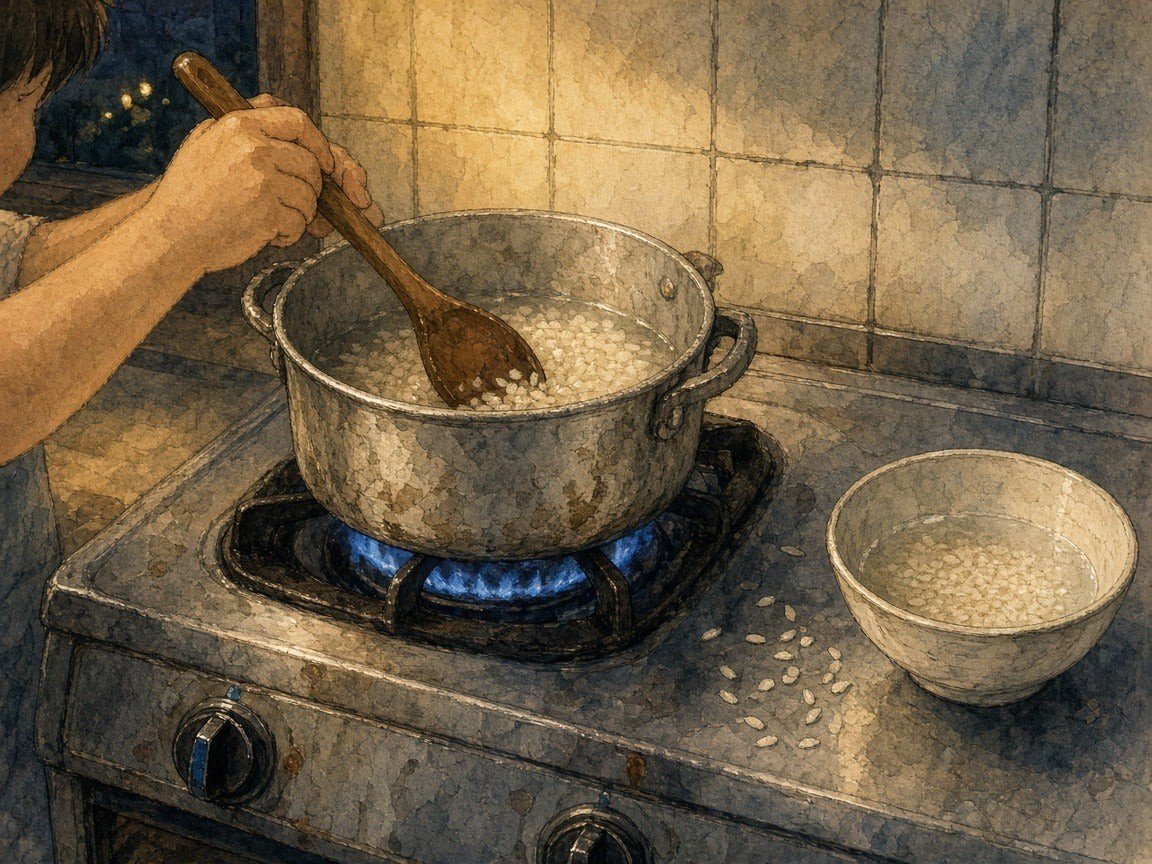
Wash the rice three times. Water up to the first line of your finger. Gas on high, then low.
The rice pot was an old aluminium one with a dent on one side, from the time Dad dropped it at a family picnic. It was almost too heavy for me to lift with water inside.
The gas stove went click-click-click-whoosh, and I jumped back every time.
That first night, the rice was crunchy in the middle and burnt at the bottom. I cried. I waited for her to take the spoon from me and fix it.
She didn't.
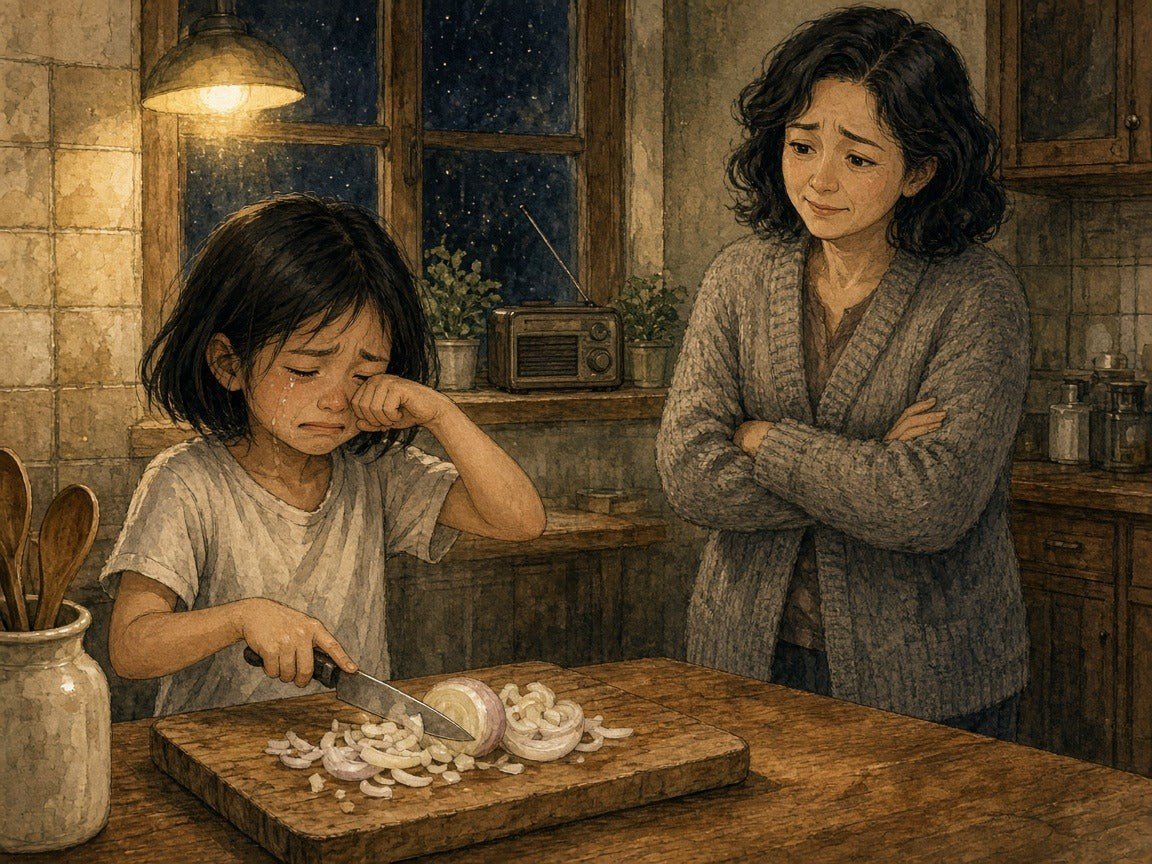
She stood next to the stove with her arms folded and said, "Eat what you made. Try again tomorrow."
TRY AGAIN TOMORROW
It became the sentence of my childhood.
I burnt eggs. "Try again tomorrow."
I cut onions and cried so hard I couldn't see. "Try again tomorrow."
I touched the side of the pan and got a burn on my thumb that blistered for a week. She held my hand under the tap, very gently, for a long time. And then she said it again.
My friends' mothers were nothing like her. At Michelle's house, her mother brought us Milo and kuih while we did homework. At Priya's, there was always hot thosai waiting. I would sit there and eat their food slowly, like it was a holiday, and then walk home to my cold stove.
One night, I shouted at her. "Other mothers cook for their children!"
She didn't shout back. She just pulled her cardigan tighter and said, "I know, sayang."
That was worse than shouting.
THE YEAR I STOPPED ASKING
By June, I stopped asking her for help.
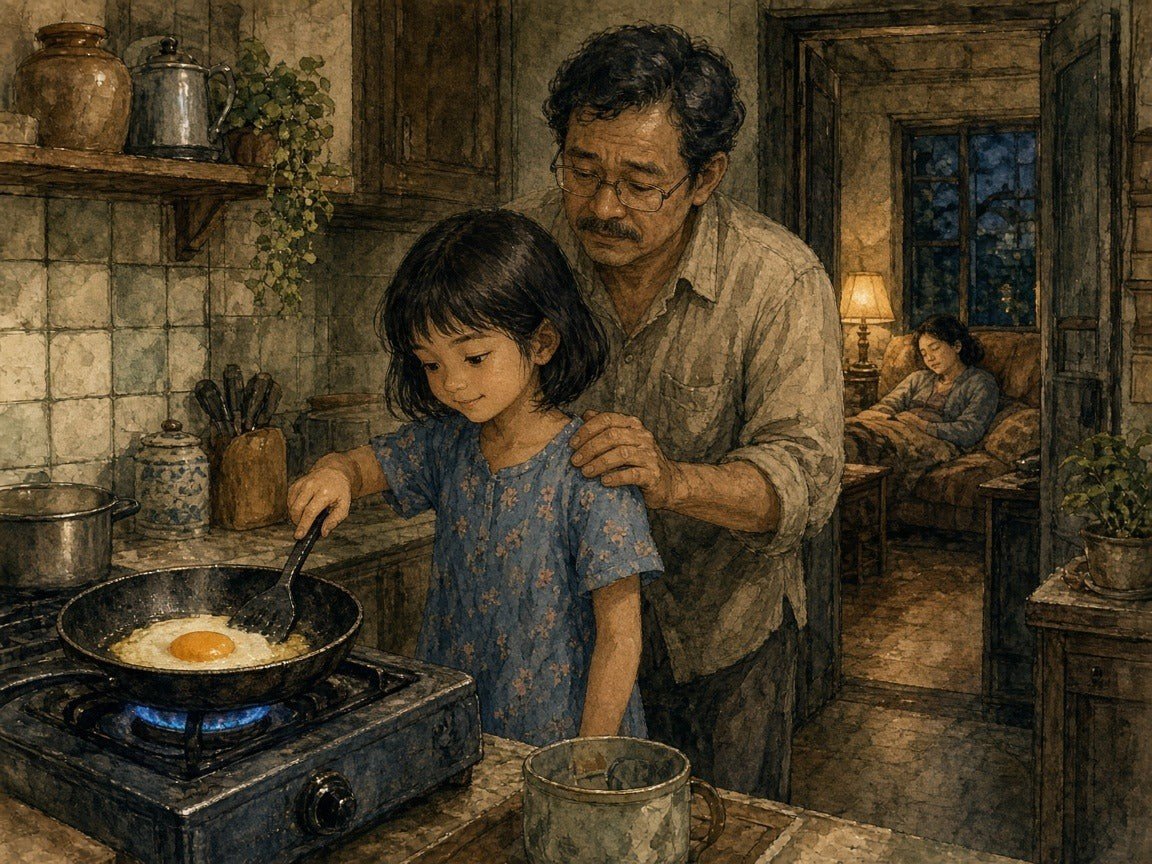
By September, my rice was perfect. I could fry an egg with the yolk still runny. I could make Mum's simple sambal from memory, and I could tell by the smell when the garlic was about to burn.
She would sit at the table and eat whatever I made. Sometimes she ate very little. Sometimes she went to lie down straight after.
I thought she was lazy. I thought, honestly, that she had stopped loving me the way other mothers loved their children.
Dad worked late that year. When he came home, he would stand behind me at the stove and squeeze my shoulder, a little too hard, and not say anything.
I didn't know what that meant either.
Then, the next year, Mum started cooking again. Just like that. Devil curry at Christmas. The radio on. As if nothing had happened.
I never asked why. I think I was still too angry.
THE FILE
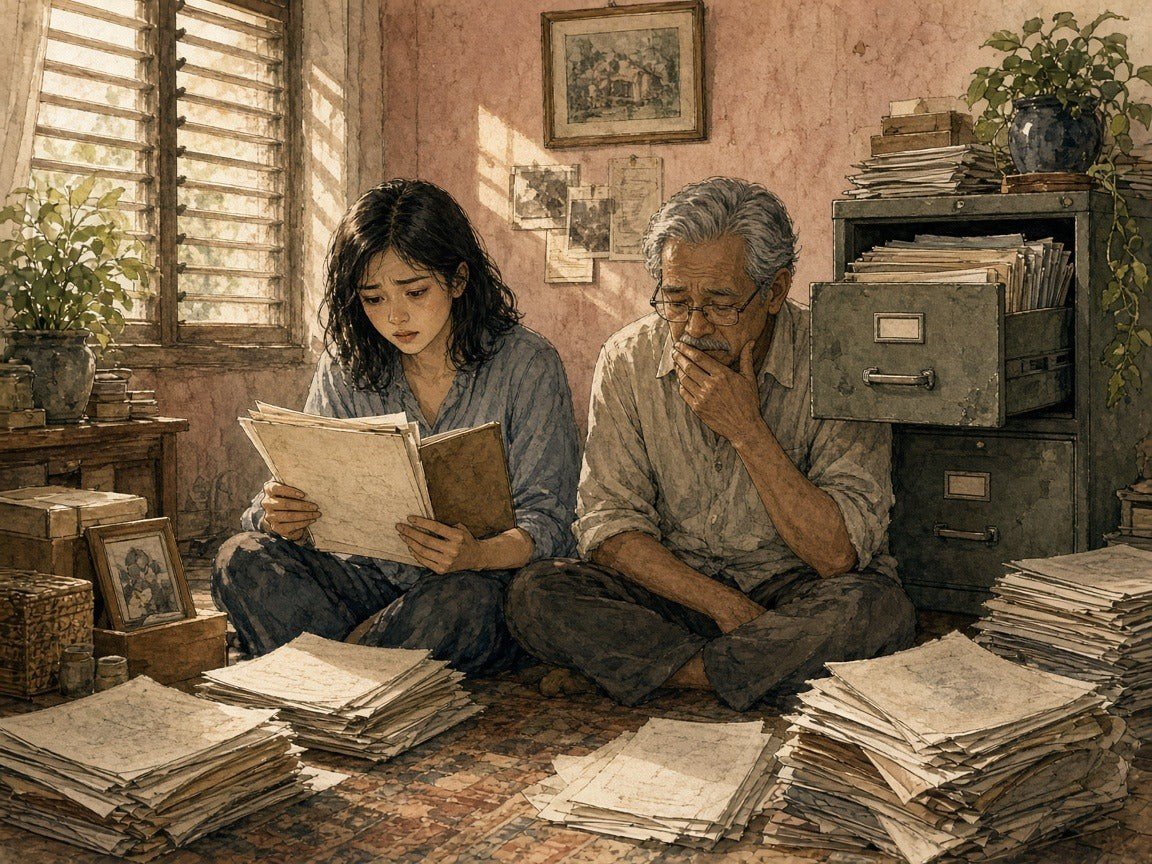
I was twenty-five when Dad asked me to help him clear the old cabinet in his study.
There were decades of bills in there. Electricity. Insurance. My school fees.
And a brown file from 2004, the year I was nine.
Inside were letters from the hospital in Ipoh. Appointment dates. Chemotherapy schedules. A diagnosis I had to read three times before the words made sense.
Breast cancer.
I sat down on the floor of the study with the papers in my lap.
The cardigan, in thirty-two degree heat. It had been hiding the port in her chest.
The days she lay down after dinner. Dad's late nights, which weren't at work. His hand on my shoulder.
And the year of "try again tomorrow."
It was the year my mother didn't know if she would have a tomorrow.
Dad sat down on the floor beside me. He was quiet for a long time.
"She made me promise never to tell you," he said. "She said, if I don't make it, she has to be able to feed herself."
WHAT SHE WAS REALLY TEACHING ME
She recovered. She is sixty-eight now, and well.
She never told me. Not once, in all these years.
She didn't stop cooking because she didn't love me. She stopped cooking because she loved me so much she couldn't bear the thought of me hungry and helpless in a house without her.
So she stood by that stove with her arms folded, through the burnt eggs and the tears and the blistered thumb, while her own body was fighting the hardest battle of her life.
Every time I cried and she didn't rescue me, it must have broken her heart a little.
She did it anyway.
She wasn't teaching me to cook. She was teaching me how to be okay without her.
SUNDAYS
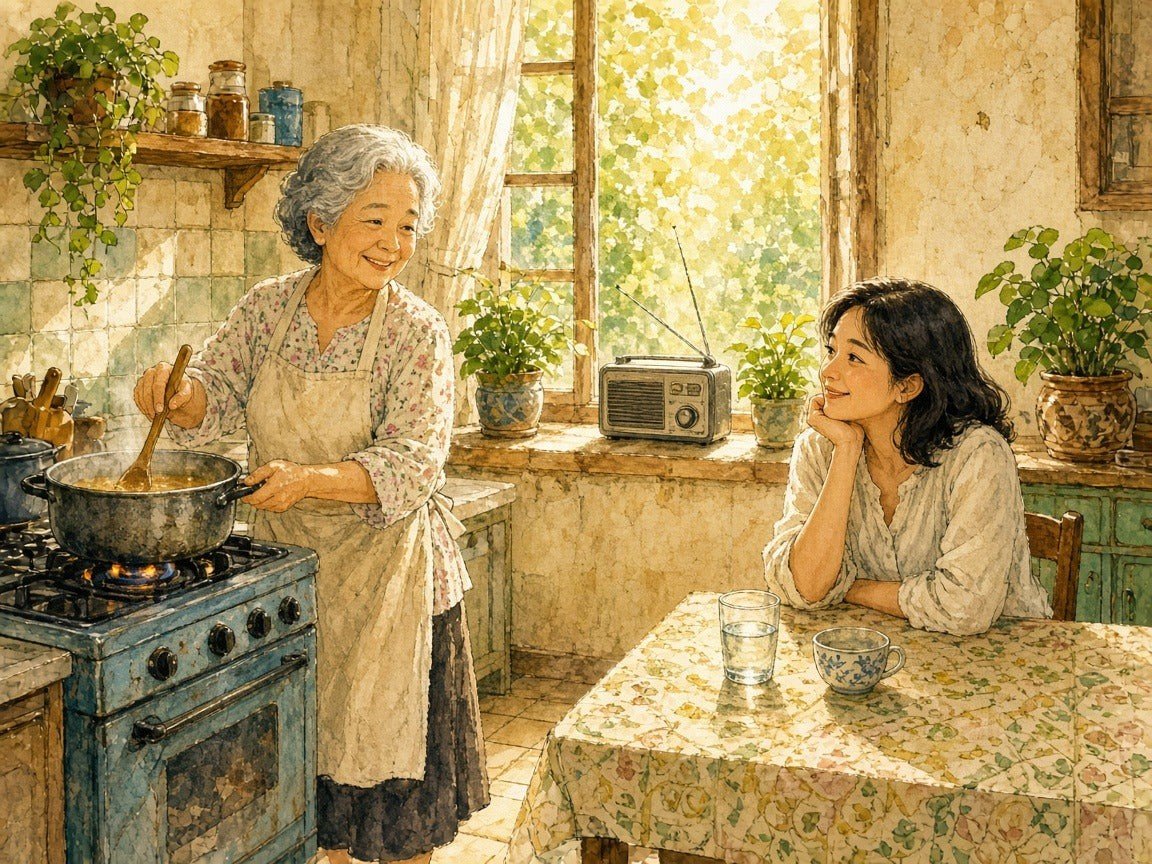
Mum still cooks every Sunday. Devil curry at Christmas. The radio on, the old English songs.
I sit at the table and let her. Every single time.
I have never told her that I found the file.
I just watch her move around that small warm kitchen, and I eat everything on my plate.
THE LESSON FOR PARENTS
At Rochford's International School, we see every day how much parents want to protect their children from struggle. It is the most natural feeling in the world.
But a child who is always rescued never learns that they can rescue themselves.
Letting children struggle is one of the hardest ways to love them. It is also one of the ones that lasts longest.
Here are a few simple ways to start at home:
- Give them one real job. Cooking rice, packing their own school bag, washing their own plate. Something the family actually needs, not a pretend task.
- Show them once, then step back. Stay close, keep them safe, but let their hands do the work, even when your hands would be faster.
- Let small failures happen. Crunchy rice and a forgotten PE shirt are cheap lessons at nine. They cost much more at nineteen.
- Say "try again tomorrow" with warmth. Struggle feels safe when a child knows you are right there, believing they can do it.
You don't need a hard reason to let your child struggle.
You only need to remember that one day, they will have to be okay without you, and the best gift you can give them is to be ready.
Our parents shaped our story. Which lesson will our children carry next?
What did your parents make you learn to do on your own? Tell us below 👇
💛 Share this with a parent who is learning to step back.
Lessons From Our Parents is a series from Rochford's International School for the families in our community. Each story is a simple parable, not an account of any real family, shared to start a conversation about raising confident, resilient children. Read more in the series, The School Bag and The Report Card, and more stories from our city in Ipoh Stories.
Rochford's International School by Rochford's Education, Ipoh, Perak, Malaysia.