The Plain Water: Every Time We Ate Out, My Mother Ordered Plain Water and Said She Wasn't Hungry
💛 Lessons From Our Parents
Every Saturday, my mother bought me a plate of wan tan mee and ordered nothing for herself.
I thought she was stingy. I didn't know she was keeping count.
By Rochford's International School
In many Malaysian homes, money is the one thing nobody talks about at the dinner table.
This is a story about a mother, a son and a cup of plain water. It is told in the voice of a grown son, looking back. It is not about any one family. It could be about any of us.
What is Lessons From Our Parents? Lessons From Our Parents is a series of short parenting stories from Rochford's International School in Ipoh, Perak, Malaysia. Each one is a simple story with a turn at the end, and a small, practical lesson for the families in our community.
THE KOPITIAM IN FALIM
We lived in a terrace house in Falim, two rows behind the main road, with a grille gate that squeaked and a front room that was really my mother's workroom.
Papa passed away when I was nine. After that, Mummy worked mornings as a cashier at a sundry shop and took in sewing at night. Hems, zips, school uniforms. I fell asleep most nights to the sound of her Singer machine.
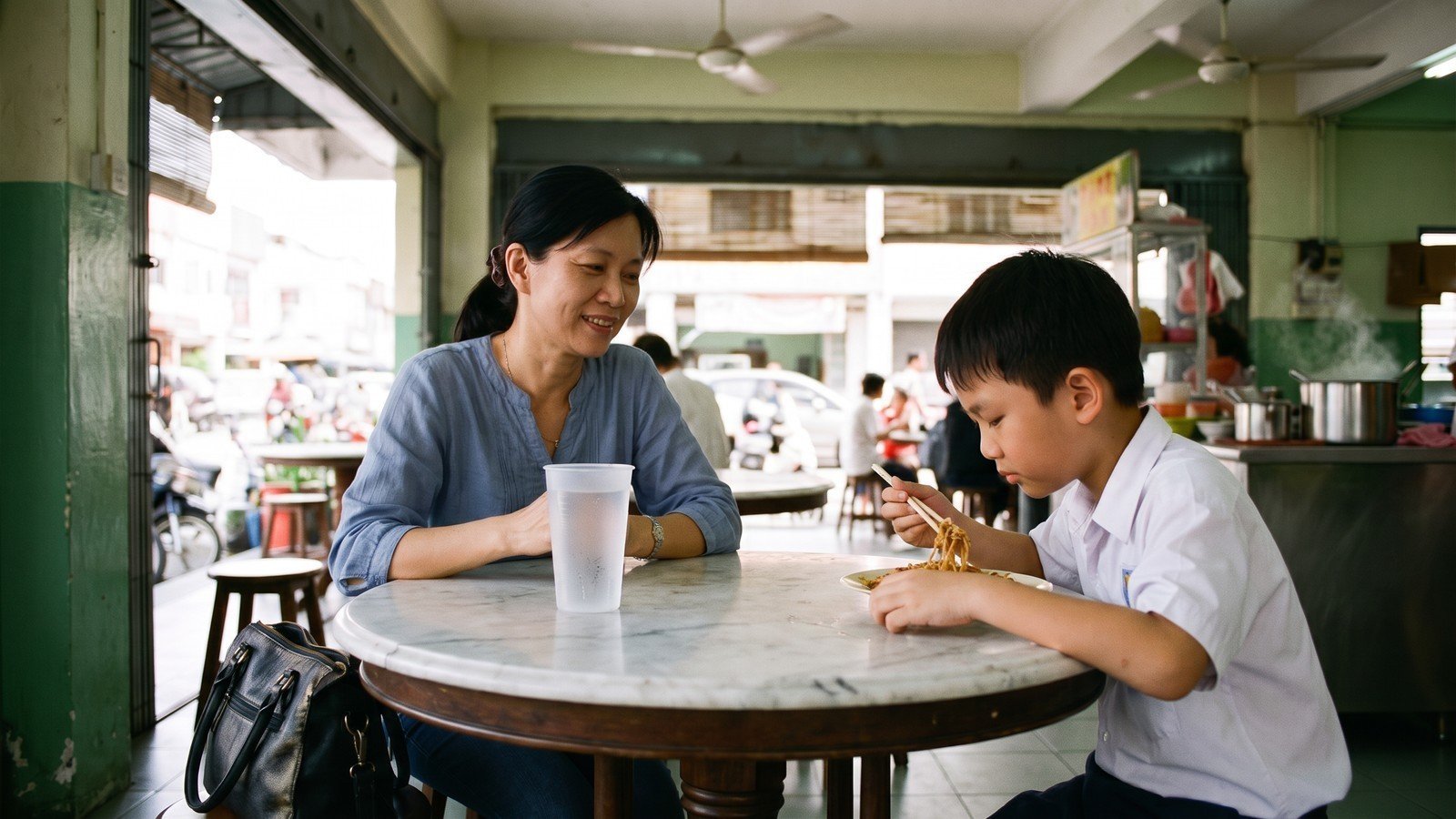
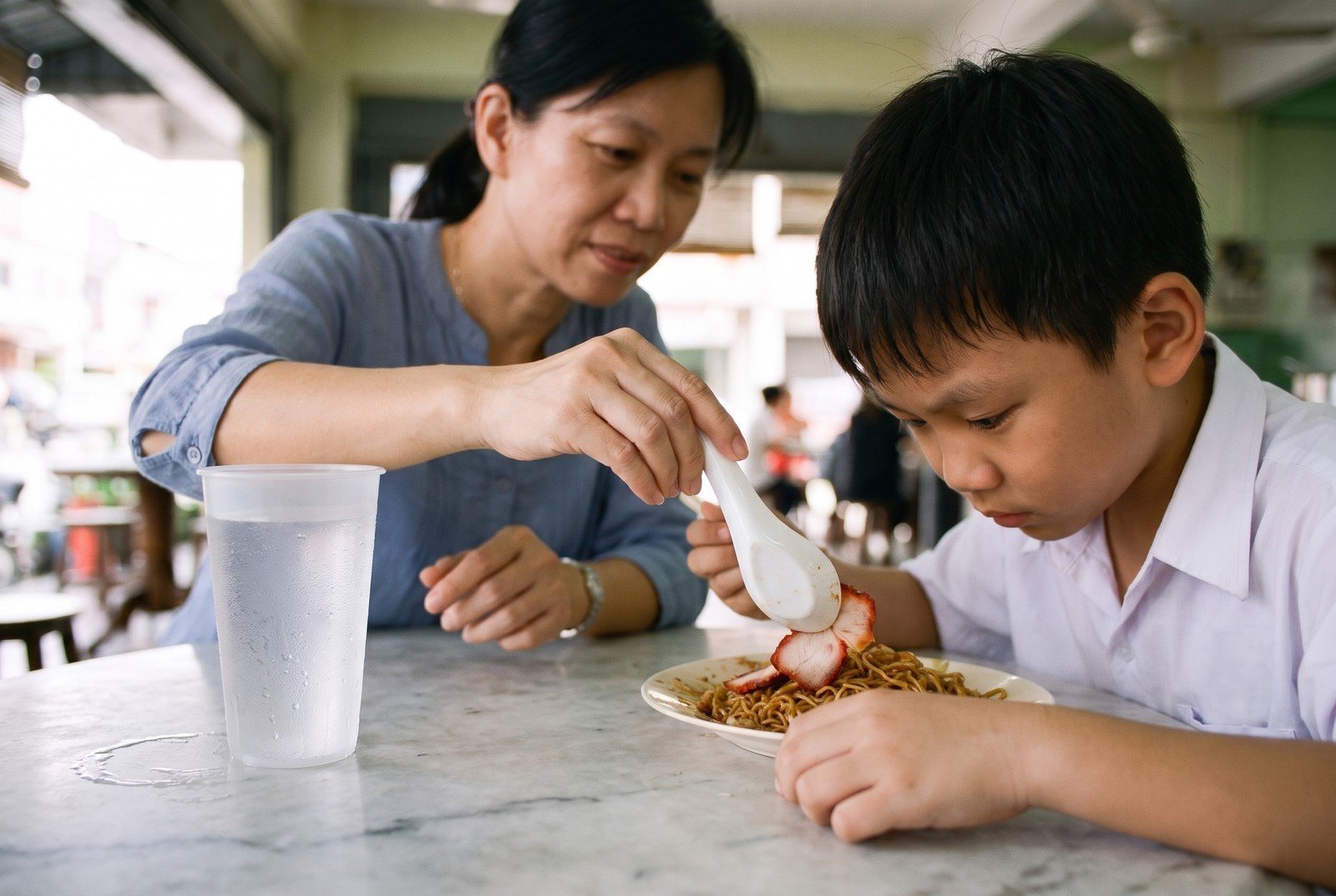
Every Saturday after Chinese tuition, we walked to the kopitiam at the corner. Same marble table, under the second fan.
"One wan tan mee, dry," she would tell the uncle. "And one kosong."
Kosong meant plain water. That was her order. Every Saturday, for years.
"Mummy just ate," she said, when I asked.
I never saw her eat before we went out. I never asked again.
THE PLAIN WATER
The plain water came in a tall plastic cup. In the Ipoh heat, it sweated straight away, and left a wet ring on the marble that she wiped with a folded tissue.
She sipped it slowly. She made it last the whole meal.
When I put down my chopsticks, she pulled my plate towards her and finished what I had left. The last strands of noodles. The choy sum I didn't like. The soup at the bottom of the little bowl.
Sometimes there was a slice of char siu left, because I always saved the best one for the end and then got too full.
She would pick it up with her spoon. Then, without a word, she moved it back onto my plate.
"You are growing," she said. "You eat."
THE PLASTIC BAG
When I was eleven, none of this bothered me. By fourteen, it bothered me very much.
One Saturday, four boys from my class were sitting at the next table. I finished eating and prayed she would just pay so we could leave.
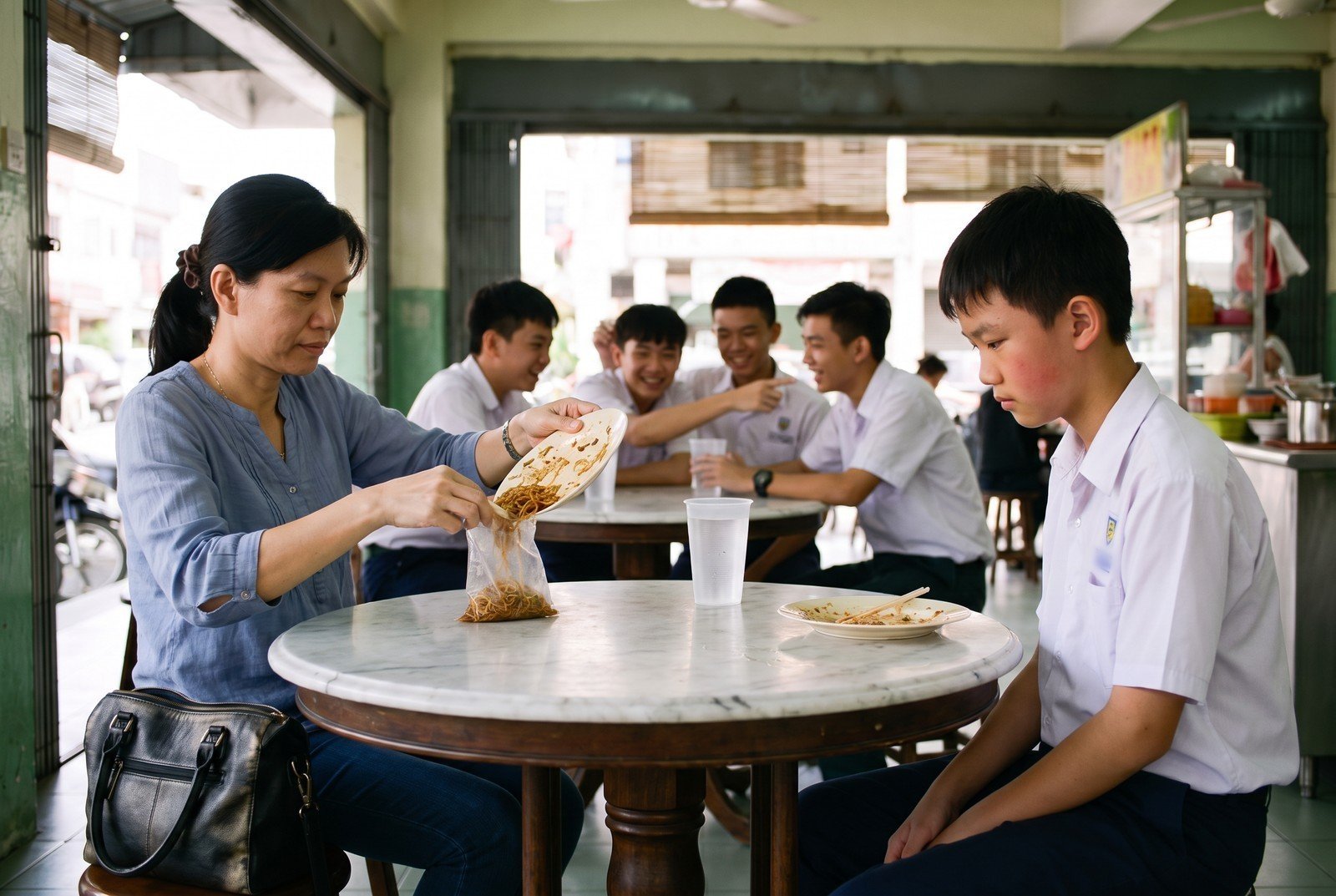
Instead, she called out, loud enough for the whole shop to hear. "Auntie, got plastic bag or not?"
She tipped my leftover noodles into the bag, tied a knot at the top and put it in her handbag. Her one handbag. Black, with a strap that had been peeling for as long as I could remember.
The boys laughed. On Monday, one of them asked if my mother also took home the chopsticks.
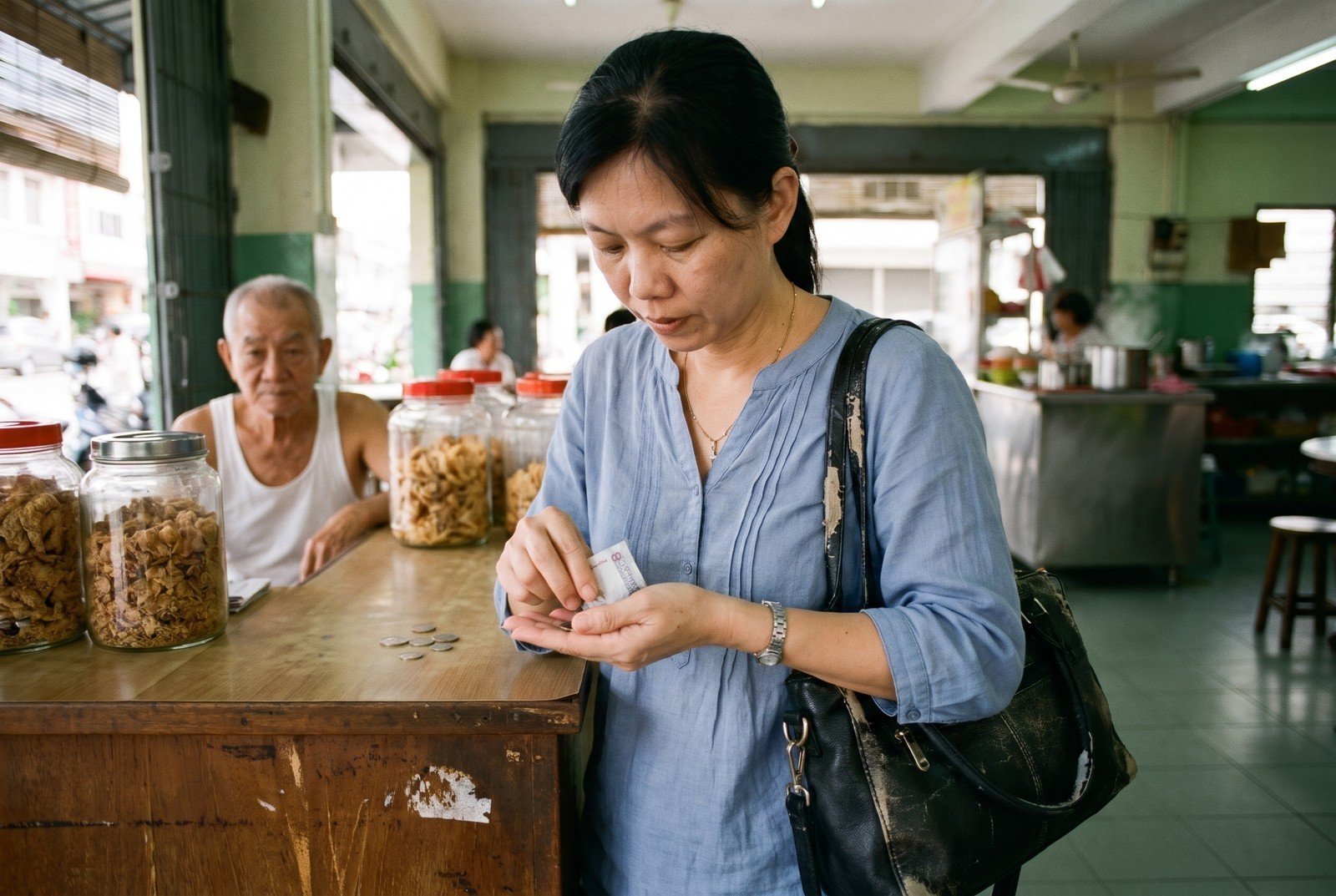
At the counter, she counted the coins in her palm. Then she counted them again. Always twice, while the uncle waited and people queued behind her.
I stood outside on the five-foot way and pretended I didn't know her.
That night I said it to her face. "Why are you so stingy? Other mothers eat."
She was at her sewing machine. She didn't look up.
"Go and bathe," she said.
GROWING UP
By fifteen, I stopped going with her. I ate with my friends instead.
In Form 4 and Form 5, I went to tuition in town for Add Maths, Physics and Chemistry. Three subjects, every week. I never once asked how a sundry shop cashier paid for that. I just went.
I did well in SPM. I went to university in Penang. Now I'm twenty-eight, an engineer, and I can eat whatever I like, wherever I like.
THE RED BOOKS
This year, Mummy finally moved out of the Falim house to a small ground-floor flat, closer to her clinic. I came home for two weekends to help her pack.
In the bottom drawer of her sewing table, under a pile of old patterns, there was a plastic bag tied with a knot.
Inside was a stack of small red account books. The cheap kind, with thin pages. There were twenty-three of them.
For six years, she had written down every sen we spent. Rice. Electricity. Bus fare. Thread. Zips.
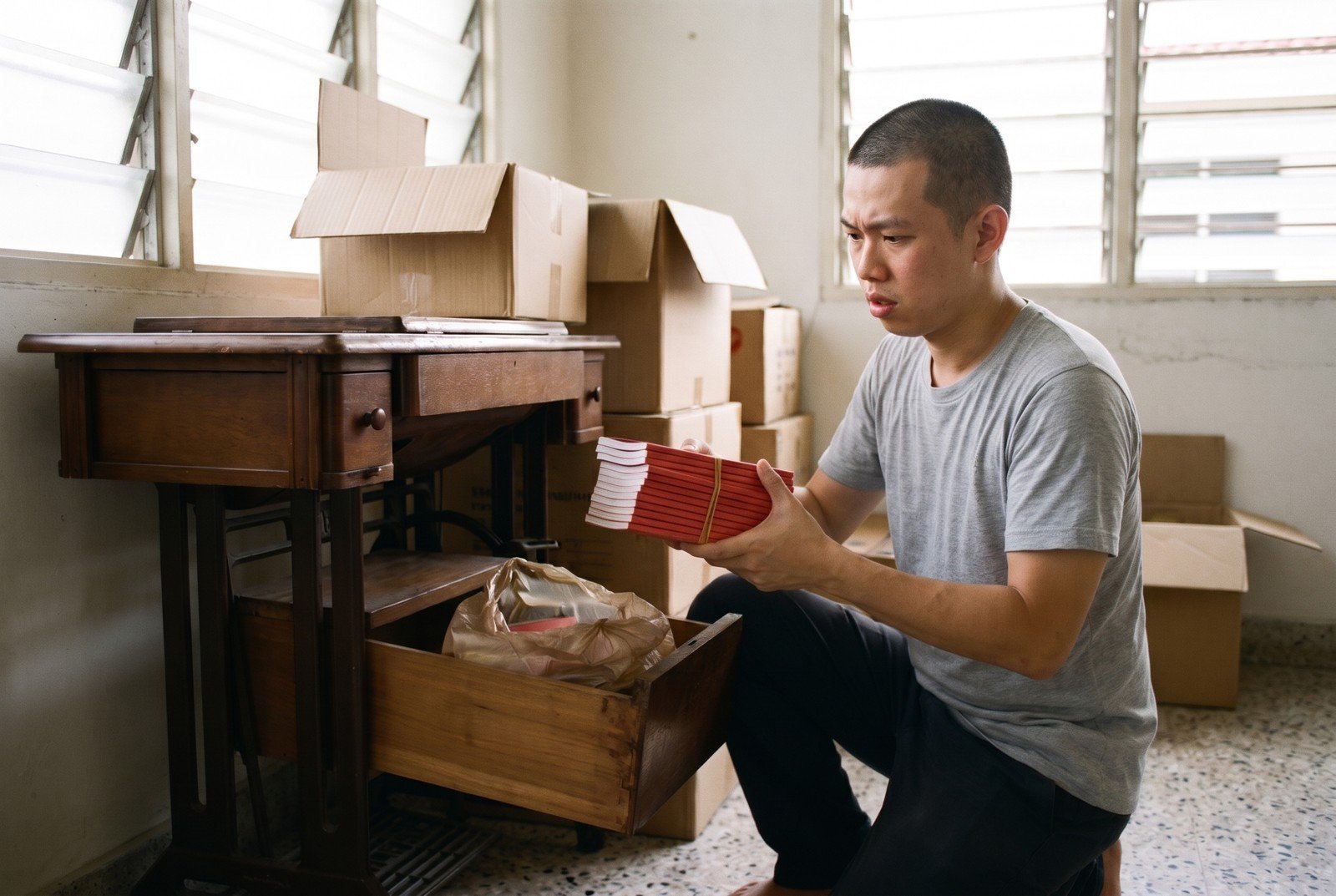
I sat down on the floor and turned the pages.
Every Saturday, there were two lines, in her small, careful handwriting.
Jun Hao: wan tan mee RM5.50
Me: 0
I turned the pages faster. Months. Years. The price next to my name went up a little over time.
Next to her name, every single time, she had written a zero.
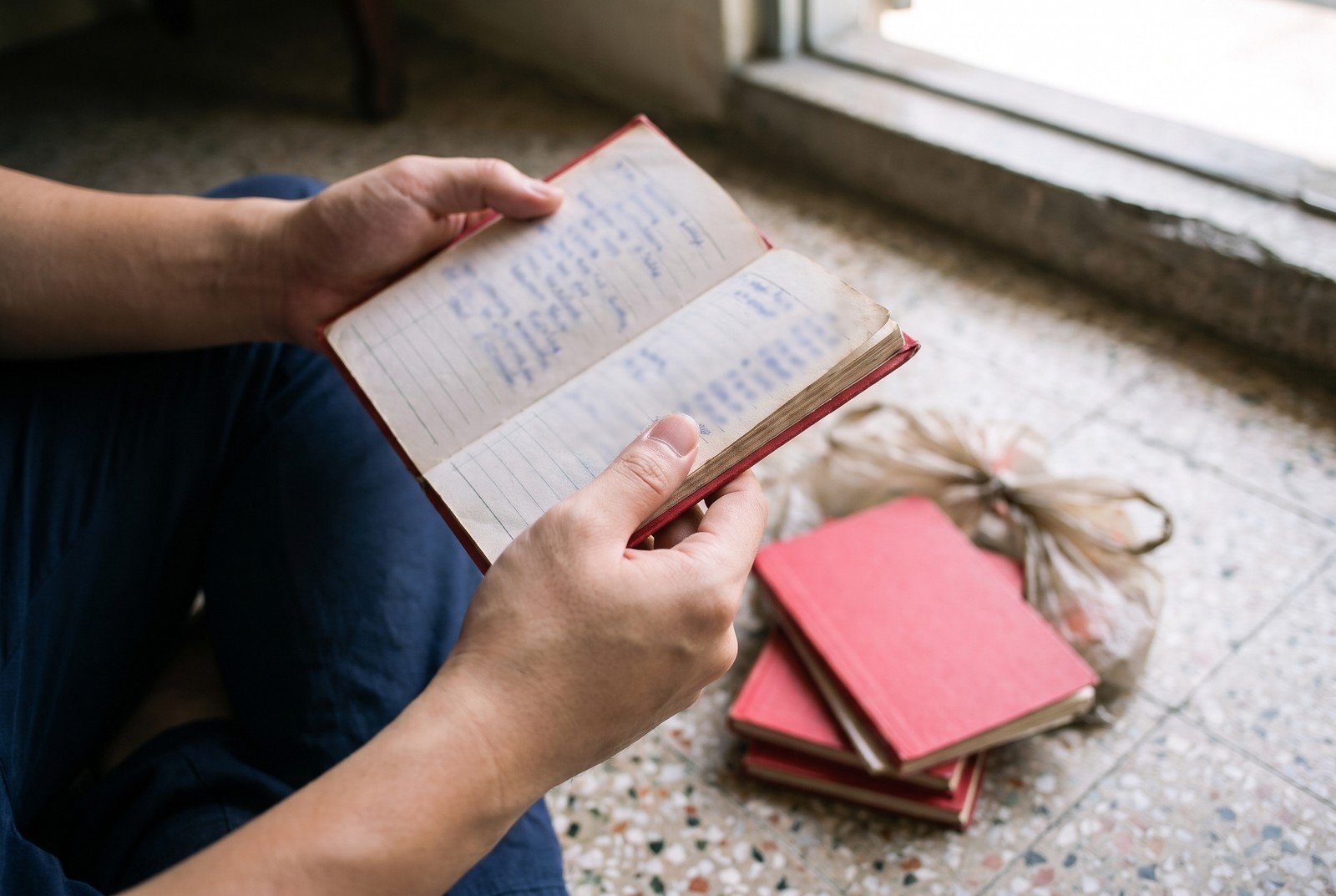
At the bottom of every month, she had added up what she didn't spend on herself. The plate she never ordered. The drink she never bought. The leftovers in the plastic bag, which were her dinner that night.
Next to each total, she had written one word: tuisyen.
The numbers matched. Month after month, what she saved by not eating was what my tuition cost.
"Mummy just ate."
She hadn't. Not once.
WHAT SHE SAID
I found her in the kitchen, wrapping plates in newspaper. I held up the book. I couldn't say anything.
She looked at it, then at me. She took it from my hand and closed it.
"Tell you for what?" she said. "You were a child. Your job was to eat."
Then she put the book in the box with the plates and said, "Don't throw, ah. Still got empty pages."
TWO PLATES
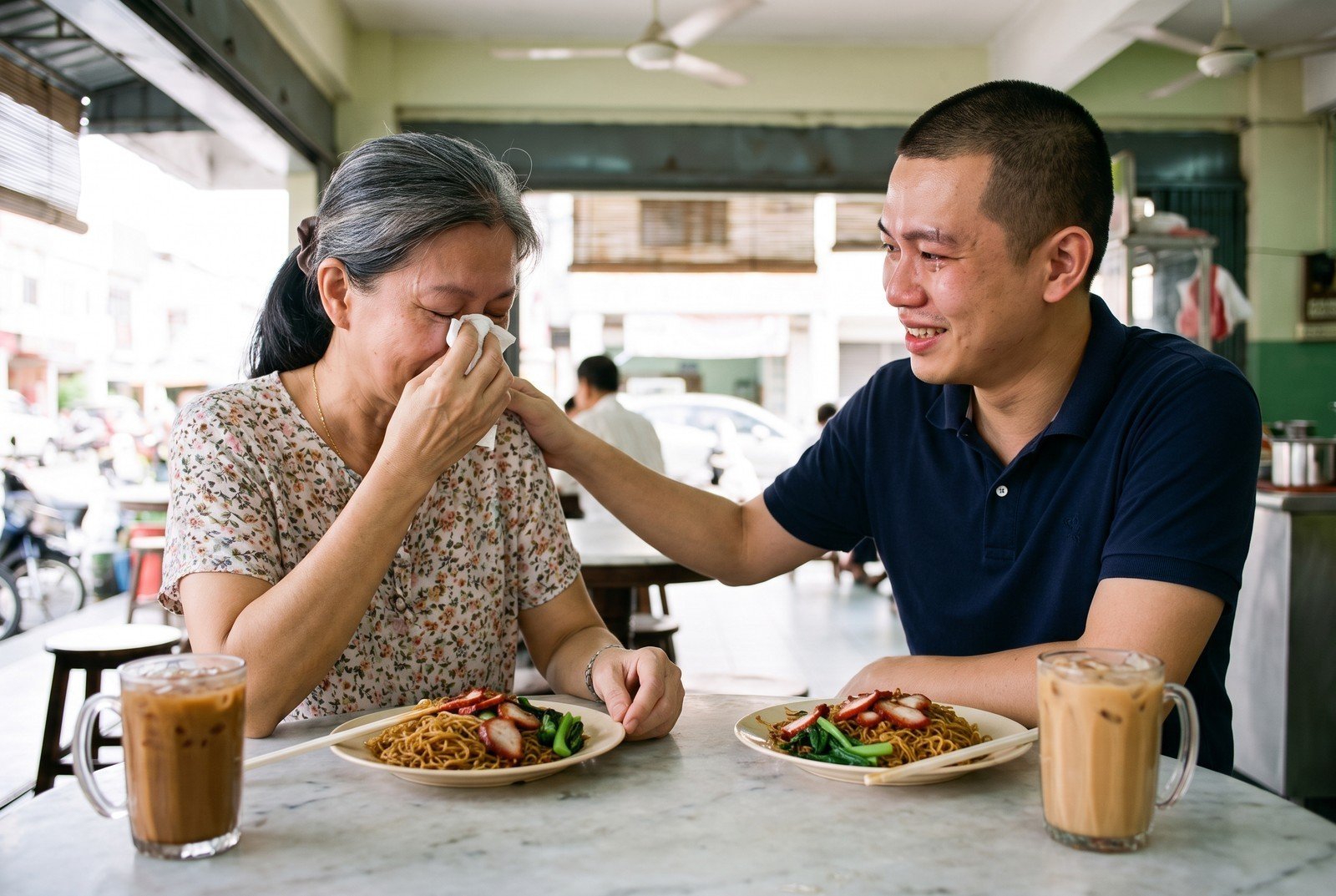
Last Sunday I took her for wan tan mee.
Same kopitiam in Falim. Same marble table, under the second fan. The uncle is older now, and his son does the noodles.
I ordered two.
She cried before she even picked up her chopsticks.
THE LESSON FOR PARENTS
At Rochford's International School, we meet many parents who carry their money worries quietly, so their children never have to feel them. That is love, and it is usually the right instinct.
Small children need to feel safe. They don't need to know about the bills.
But a fourteen-year-old who thinks his mother is stingy has only ever seen half the story. The half we chose to hide.
Children don't need to carry your money worries. When they're old enough, though, let them see what "enough" cost you.
Here are a few simple ways to start at home:
- Protect them from the worry, not from the truth. "We can't afford that this month," said calmly, teaches more than any excuse.
- Let a teenager see the budget once. Sit down together with the month's bills. Rice, electricity, school fees. Let them see where the money goes.
- Explain the "no" when they're ready. A sacrifice that is never explained can look like meanness from the other side of the table.
- Don't always order the plain water. Children learn your worth by watching how you treat yourself. Sometimes, order the second plate.
Our children don't need to know every sacrifice we make.
But one day, they deserve to know a few.
Our parents shaped our story. Which lesson will our children carry next?
What did your parents quietly go without, so you could have more? Tell us below 👇
💛 Share this with a parent who always says "I already ate."
Lessons From Our Parents is a series from Rochford's International School for the families in our community. Each story is a simple parable, not an account of any real family, shared to start a conversation about raising confident, resilient children. Read more in the series, The School Bag, The Report Card, The Rice Pot, The Murukku and The 9PM Switch, and more stories from our city in Ipoh Stories.
Rochford's International School by Rochford's Education, Ipoh, Perak, Malaysia.