The Stopwatch: My Father Bought Me Cendol the Day I Came Last
💛 Lessons From Our Parents
I came last in front of the whole school. My father bought me dessert.
I thought he was laughing at me. He was keeping time.
By Rochford's International School
Every Sports Day, somebody has to come last.
This is a story about a boy who did, a father who didn't seem to mind, and a cheap plastic stopwatch. It is told in the voice of a grown son, looking back. It is not about any one family. It could be about any of us.
What is Lessons From Our Parents? Lessons From Our Parents is a series of short parenting stories from Rochford's International School in Ipoh, Perak, Malaysia. Each one is a simple story with a turn at the end, and a small, practical lesson for the families in our community.
THE SLOWEST BOY IN STANDARD THREE
I was the slowest boy in my class. Everybody knew it, including me.
In Standard Three, I came last in the 400m by so much that the teachers started packing up the finishing tape before I got there. That night at dinner, I told Abah I was never running again.
Abah drove a lorry for a hardware supplier in Menglembu. He left the flat at six in the morning and came home after seven at night, smelling of diesel and sweat, his navy uniform shirt stuck to his back.
He listened to me, chewing slowly. Then he said, "Tomorrow, after Abah comes back. Wear your shoes."
THE PADANG
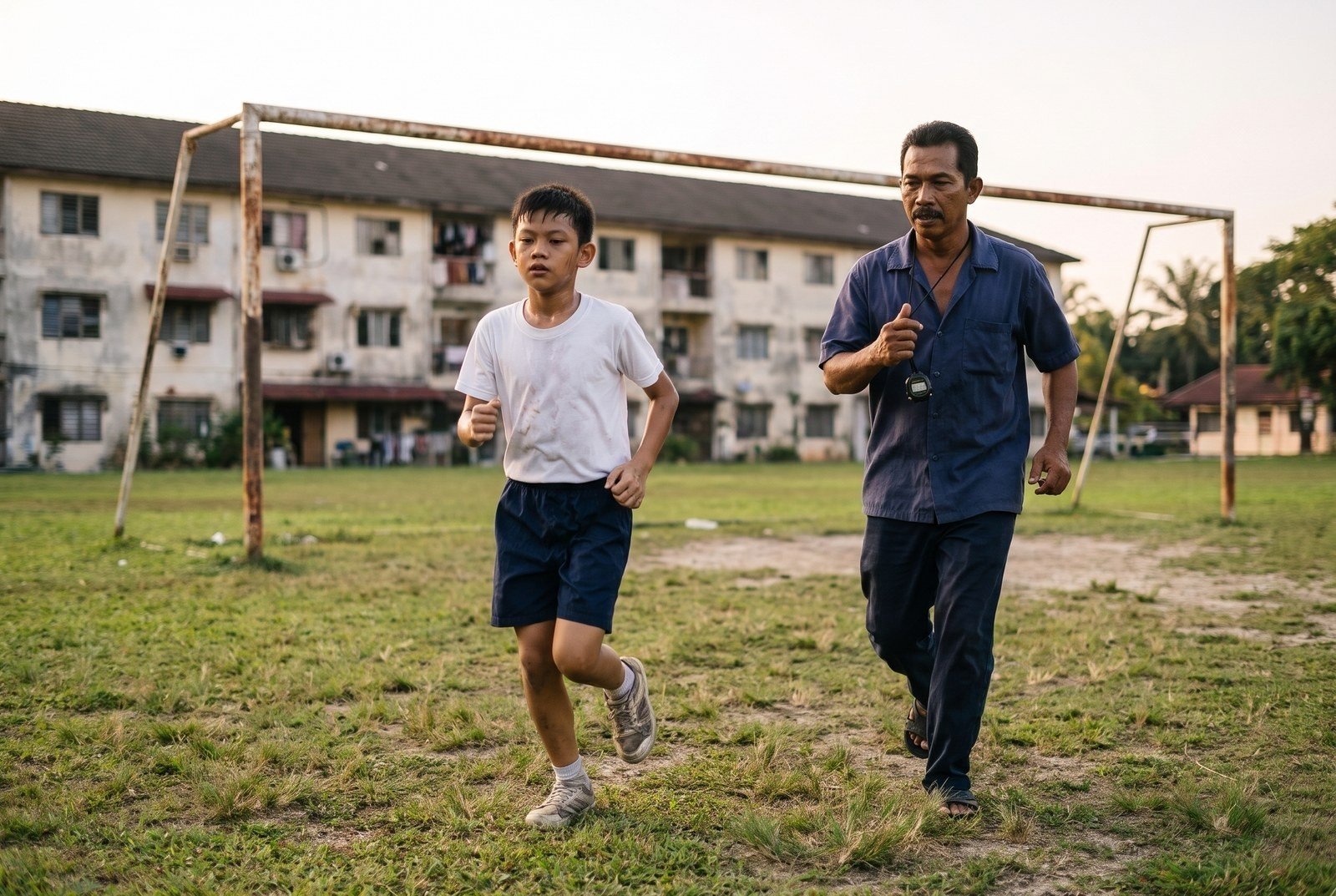
Behind our block of flats there was a padang. Patchy grass, two rusty goalposts, mosquitoes the size of rice grains.
Every evening that year, Abah came home, drank one glass of teh O, and walked me down there still in his uniform. He had bought a stopwatch from the pasar malam. Black plastic, RM8, with a string to hang around his neck.
"One round," he said. "Go."
I ran. He limped along the inside of the track beside me, because his right knee had been bad since a fall off the lorry years before. He never ran properly. He just kept going, half a step behind, clicking the stopwatch.
When I finished, I asked him my time.
He looked at the stopwatch, then put it in his pocket. "Again," he said.
He never told me. Not once, the whole year.
SPORTS DAY
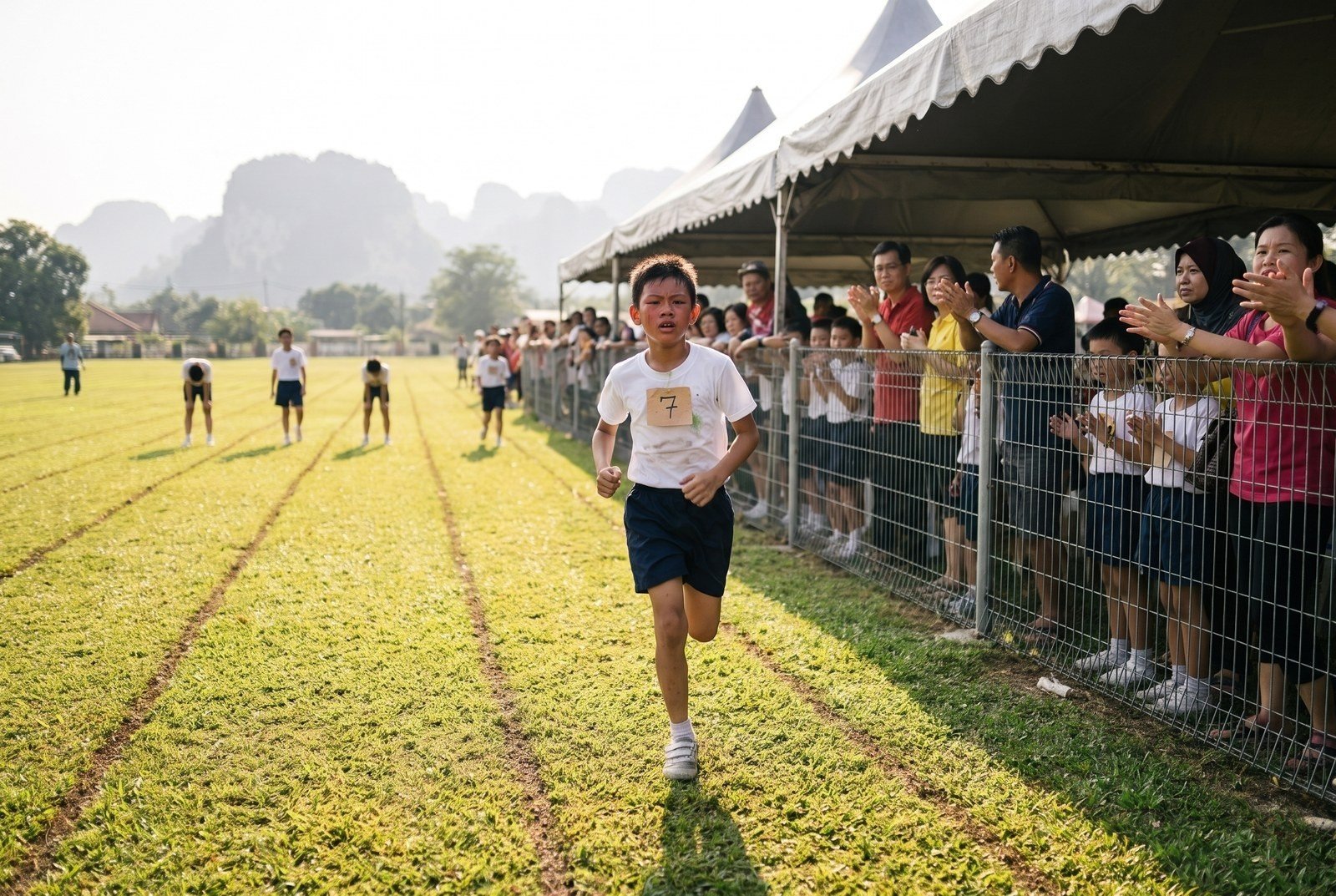
The next Sports Day, I was ten. Abah came straight from a delivery, still in his uniform and his cracked Bata slippers, and stood at the fence with the other parents.
My number was pinned on with a safety pin, crooked. It fell on the grass during warm-up and came back with a green stain across it.
The gun went off. By the first bend, I could see the backs of every other boy. By the last bend, they had finished.
I ran the final hundred metres alone. Then the whole field started clapping. Teachers, parents, the Year Six boys in the stand. It was the kind of clapping you give a cat that has fallen into a drain and climbed out.
I wanted the field to swallow me.
THE CENDOL
Abah found me behind the canteen. I was waiting for him to say never mind, or next year, or anything that would make it worse.
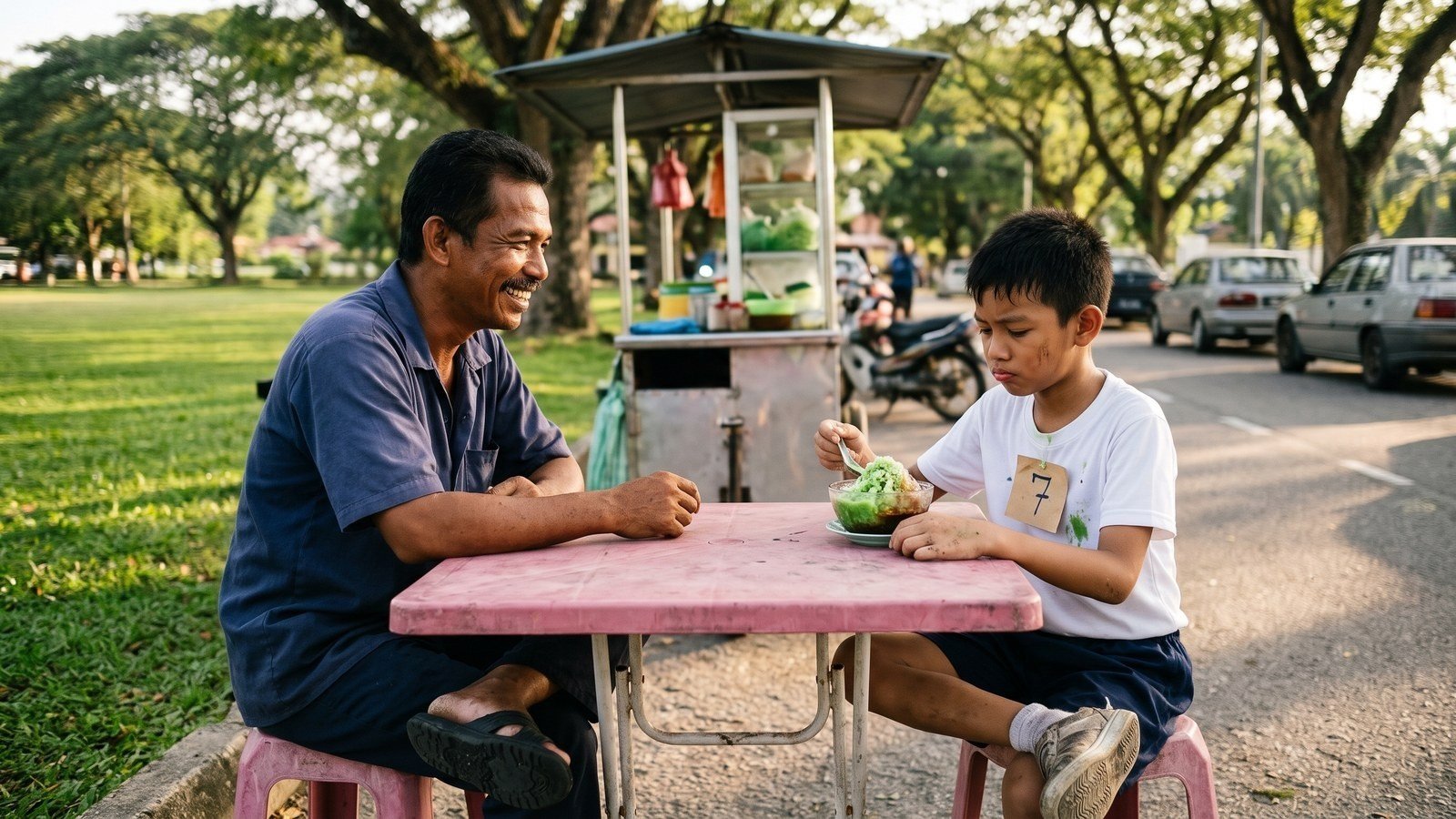
Instead, he grinned. "Jom. Cendol."
He drove me to the stall by the Polo Ground and bought me the big bowl, the one with extra gula Melaka. He ordered nothing for himself. He just sat across the plastic table and watched me eat, still grinning, as if I had brought home a trophy.
The cendol melted faster than I could eat it. I didn't want it anyway.
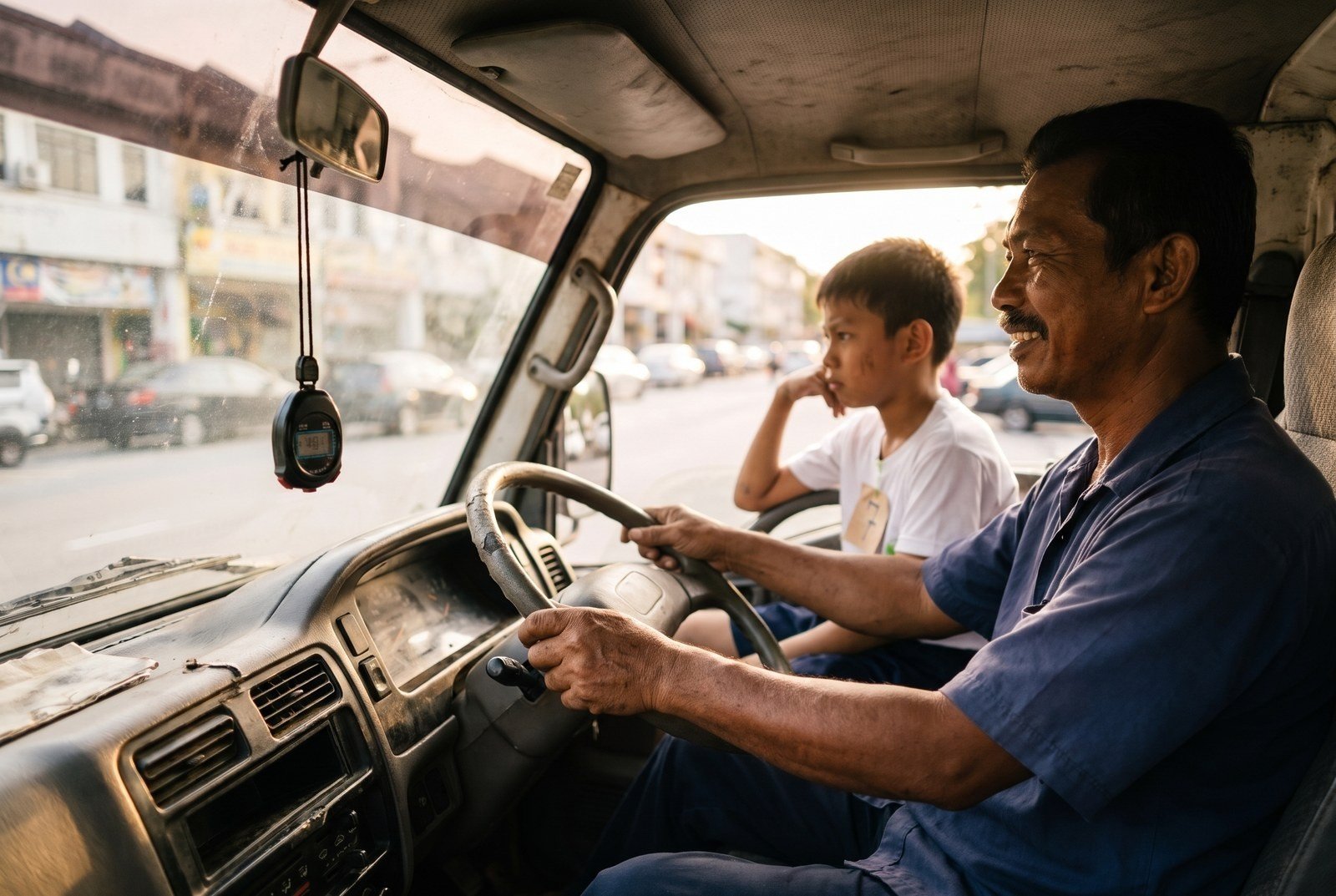
All the way home in the lorry, the stopwatch swung from the rear-view mirror, where he had hung it that morning. Abah hummed along to the radio. Every few minutes he looked over at me and smiled.
I turned my face to the window. I was sure he was laughing at me.
That night I told him I was never going to the padang again. He nodded. "Okay," he said.
We never went back.
GROWING UP
I never became fast. I became the boy who was good at Science instead, then the man who sits at a desk in KL and writes reports.
Abah kept driving until his knee wouldn't let him. He passed away three years ago, at sixty-one, in the same flat.
We never talked about that Sports Day. I thought he had forgotten it.
THE DRAWER
Last month, Mak asked me to help clear Abah's old dressing table. It had been in their room since their wedding. The mirror was spotted, and one drawer always stuck.
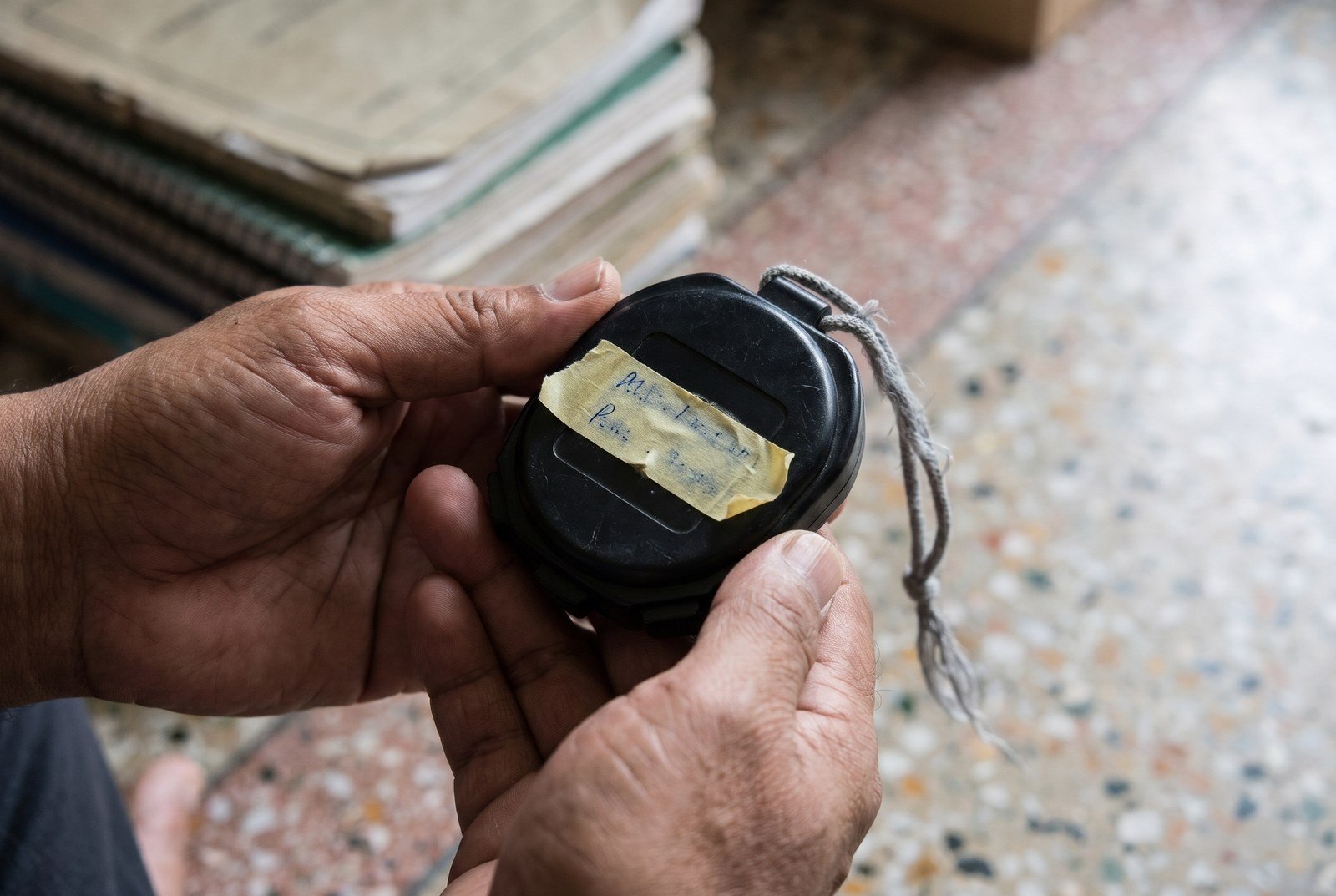
The stuck drawer was the bottom one. Inside, under his folded songkok and a bundle of old lorry logbooks, was the stopwatch.
Black plastic. The string had gone grey. The battery was long dead.
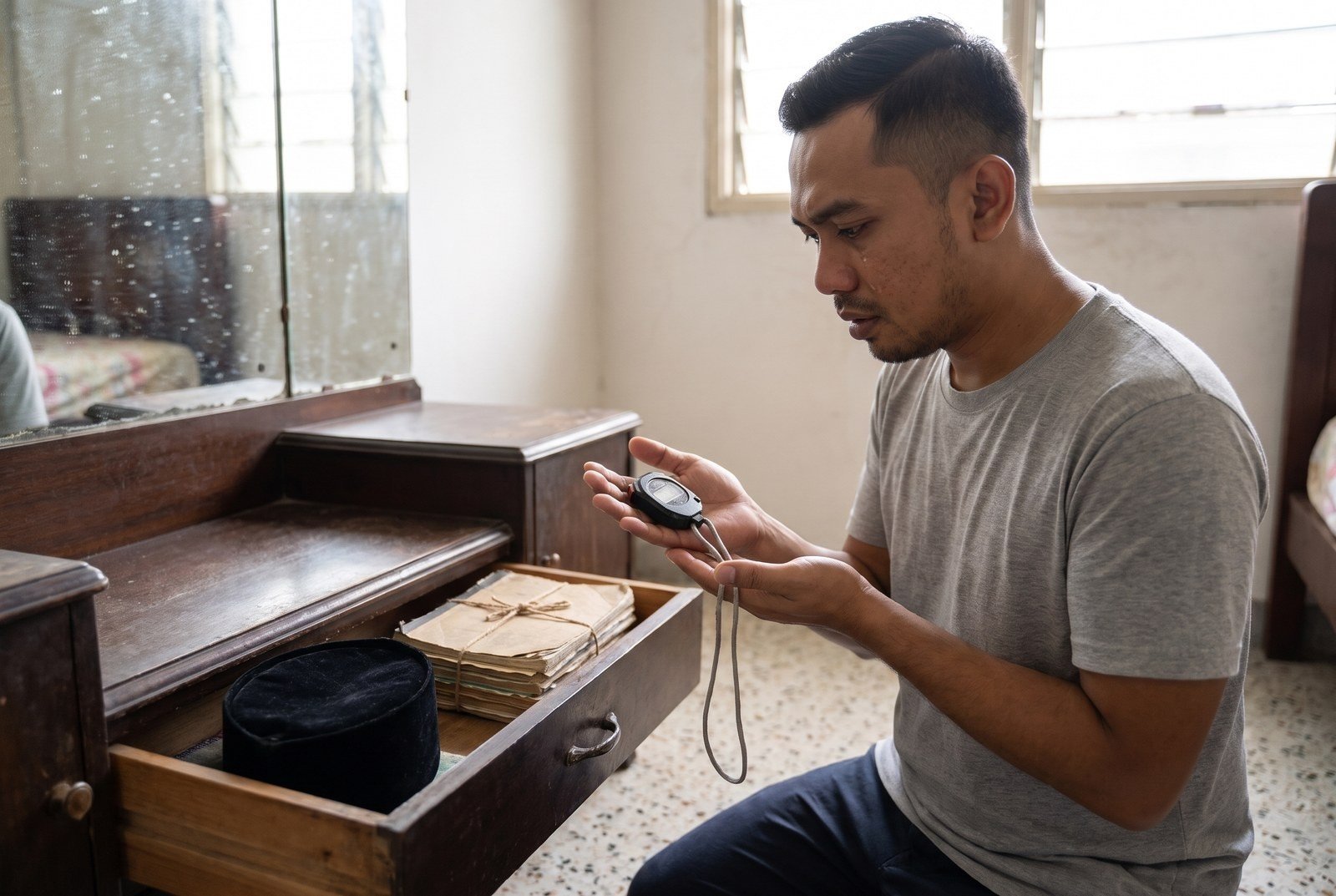
I turned it over.
On the back was a strip of masking tape, yellowed and curling at the corners. On it, in Abah's shaky handwriting, were two lines.
Hafiz 400m. 2:01
Sports Day. 1:47
2:01 was my first round on the padang, the very first evening. 1:47 was the race I came last in. He had stood at that fence and timed me, the whole way, while everyone else was clapping out of pity.
I had come last by half a track. I had also beaten myself by fourteen seconds.
Underneath the numbers, he had written three more words.
Anak aku menang.
My son won.
WHAT MAK SAID
I took it to the kitchen. Mak looked at it and laughed softly, the way people laugh when they are about to cry.
"That day he came home and told me, 'Fourteen seconds, Yah. Fourteen!'" she said. "He told the whole surau."
The cendol. The grin. The humming in the lorry. He wasn't laughing at me. He was the only person on that field who knew I had won.
I just never asked him my time.
THE STOPWATCH
I put a new battery in it. It still works.
On Saturday evenings now, I take my daughter Aisyah to the padang near our house. She is seven, and she is not fast either.
I click the stopwatch when she starts. I click it when she finishes.
And every single time, before she can ask, I tell her: "Faster than last week."

I've never won a race in my life. But my father thought I did, and that's the only scoreboard I care about now.
THE LESSON FOR PARENTS
At Rochford's International School, we see it every Sports Day. A child crosses the line last, and the first thing they do is look for a parent's face.
What they find there is what they remember.
It is very natural to measure our children against other children. Position, rank, grades, medals. The world will do plenty of that for them.
What children rarely get is someone measuring them against who they were last month.
Praise the improvement, not the position. Children remember who noticed.
Here are a few simple ways to start at home:
- Keep their "before". A first drawing, a first spelling test, a first lap time. Without a before, a child can't see how far they have come.
- Praise the specific effort. "You practised that every night" means more than "you're so clever" or "you're so fast".
- Compare them only with themselves. "Better than last term" is a race every child can win.
- Be proud out loud. Abah was proud for years and told everyone except his son. Say it to them directly, more than once.
Our children won't all come first.
But every one of them can be faster than last week, if someone is holding the stopwatch.
Our parents shaped our story. Which lesson will our children carry next?
Who noticed your effort when nobody else did? Tell us below 👇
💛 Share this with a parent who's always cheering at the fence.
Lessons From Our Parents is a series from Rochford's International School for the families in our community. Each story is a simple parable, not an account of any real family, shared to start a conversation about raising confident, resilient children. Read more in the series, The School Bag, The Report Card, The Rice Pot, The Murukku, The 9PM Switch and The Plain Water, and more stories from our city in Ipoh Stories.
Rochford's International School by Rochford's Education, Ipoh, Perak, Malaysia.