The Biscuit Tin: I Won 14 Trophies Growing Up. My Parents Didn't See a Single One
💛 Lessons From Our Parents
Every Saturday the Myvi left for KL before sunrise.
Mak always said "next time, sayang." She meant it. She just never got to say it out loud.
By Rochford's International School
Somewhere in Falim, on a quiet terrace street that smells of fried shallots by late afternoon, there is a living room with trophies on top of a TV cabinet.
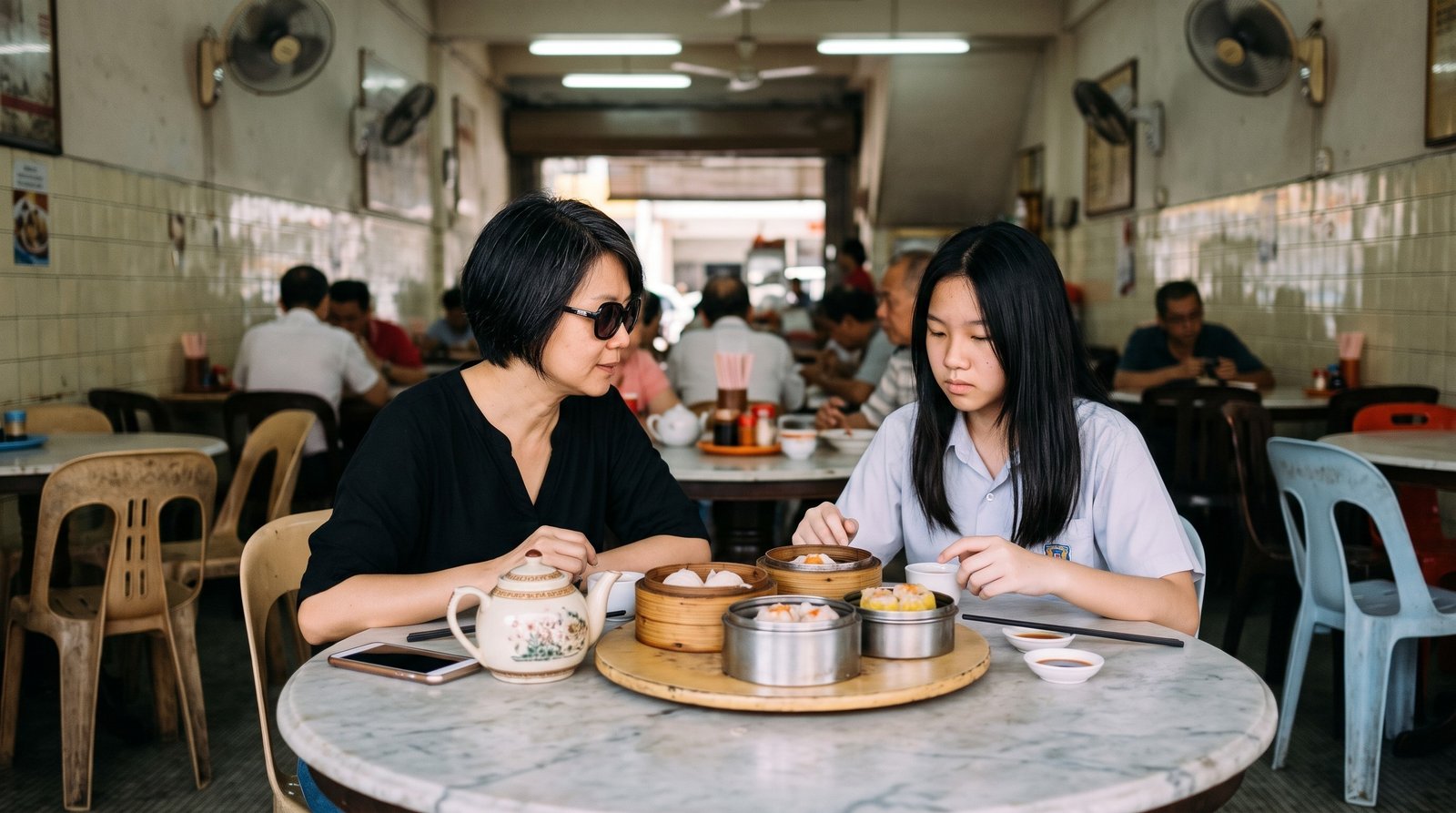
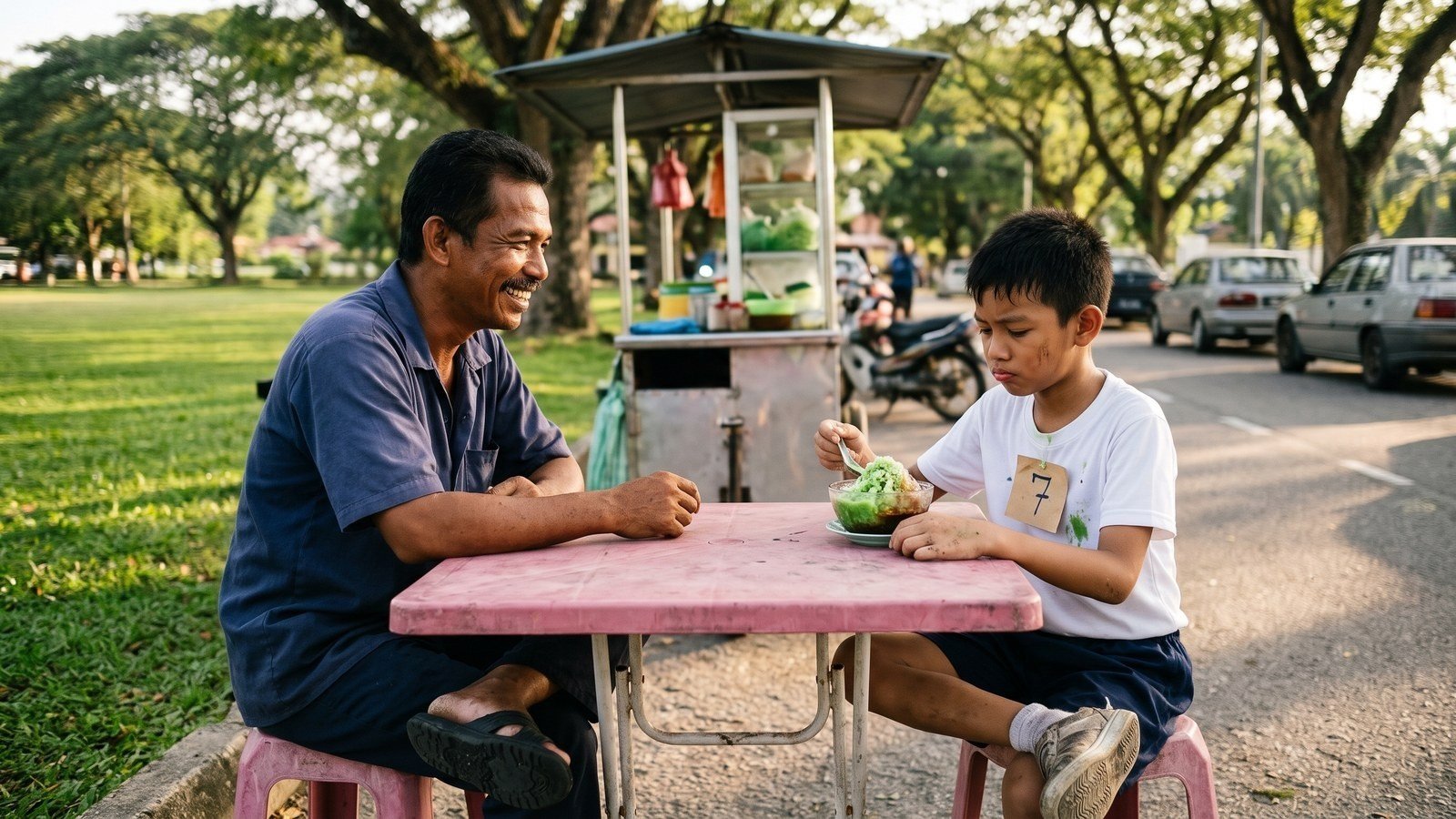
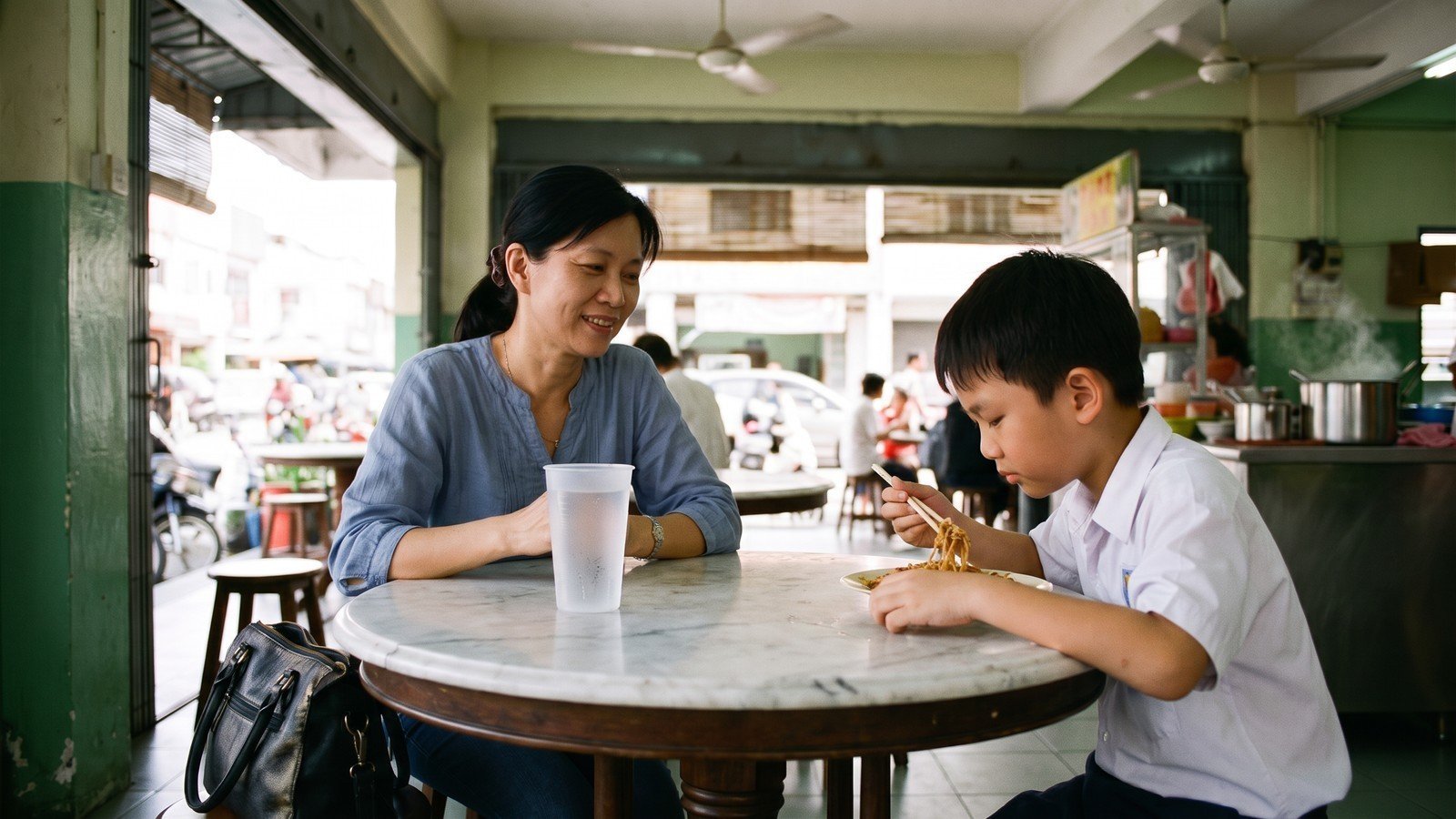
This is a story about a girl who learned to stop asking her parents to come, a brother who needed them more, and a blue biscuit tin that kept score for years. It is told in the voice of a grown daughter, looking back. It is not about any one family. It could be about any of us.
What is Lessons From Our Parents? Lessons From Our Parents is a series of short parenting stories from Rochford's International School in Ipoh, Perak, Malaysia. Each one is a simple story with a turn at the end, and a small, practical lesson for the families in our community.
THE EMPTY CHAIR
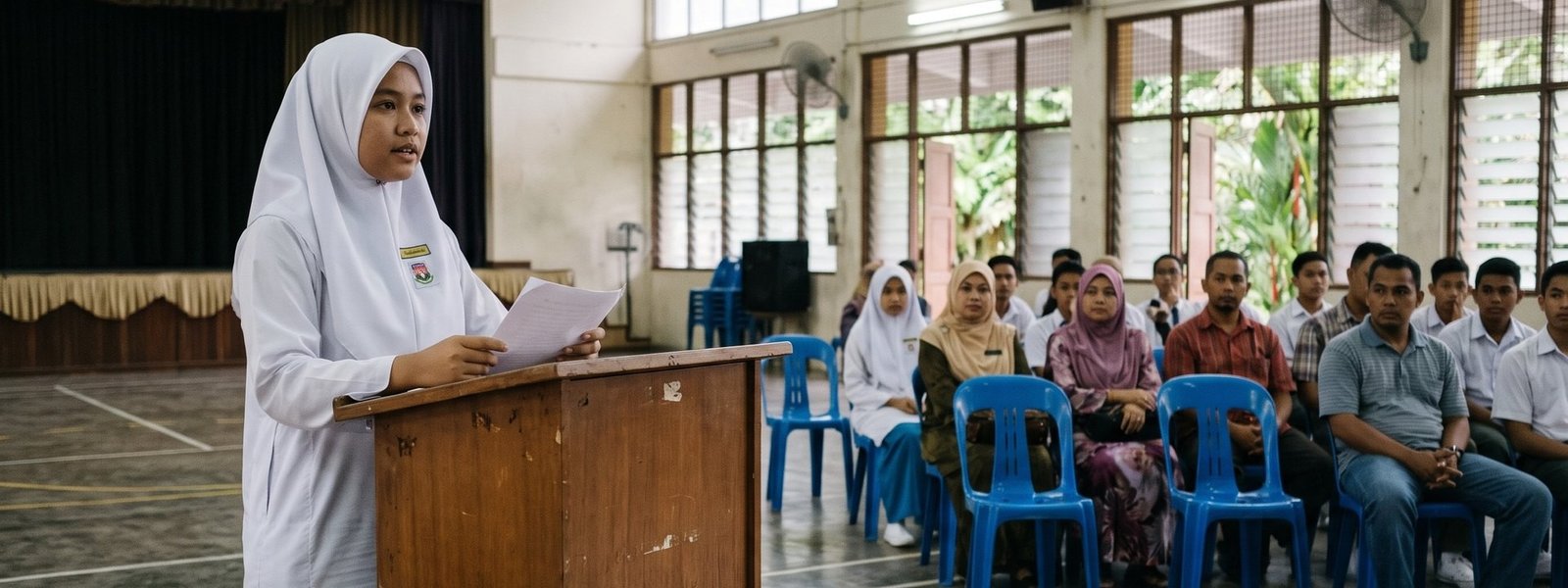
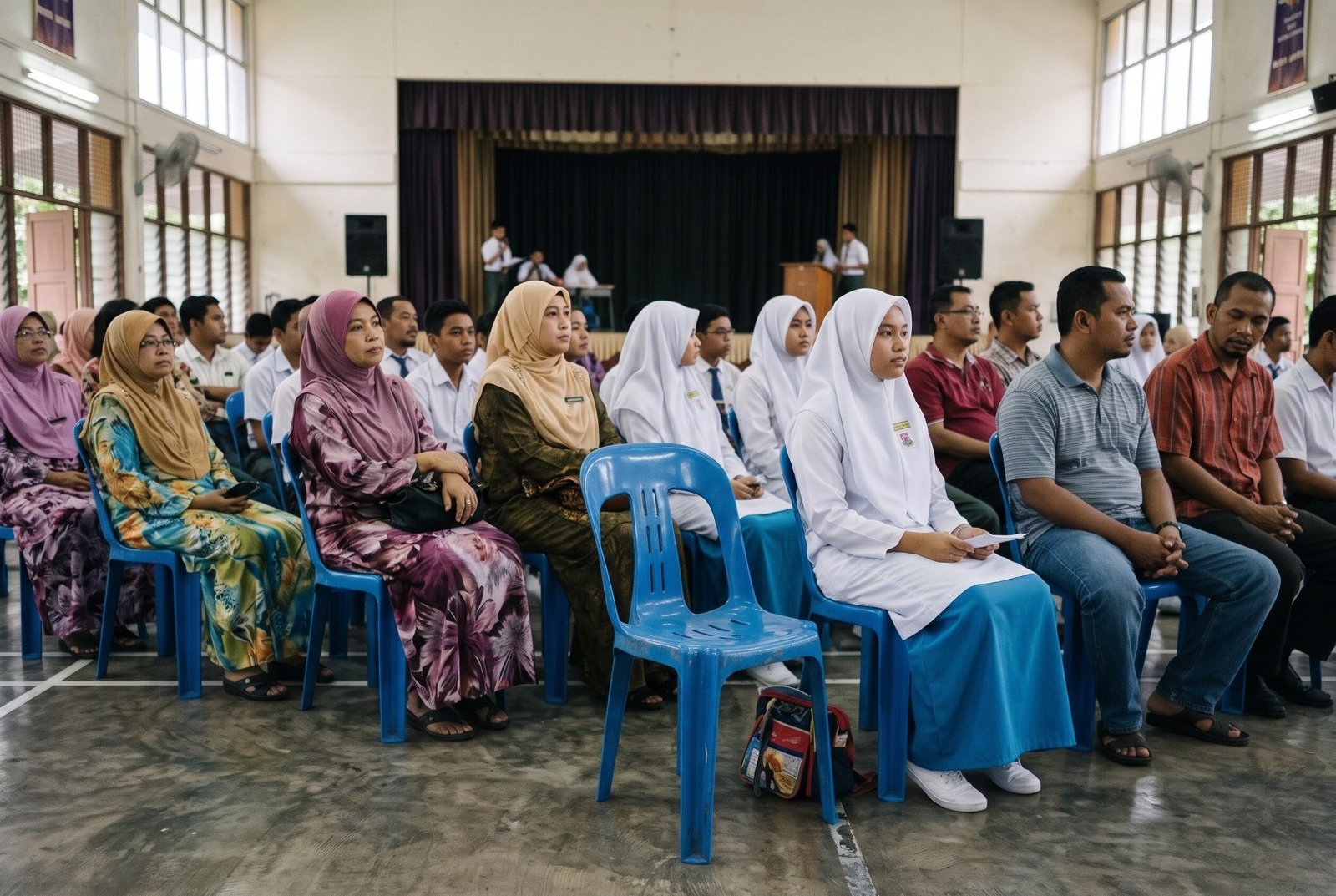
I was fourteen the first time I looked for them and knew, before I even sat down, that the second-row plastic chair would stay empty.
The school hall in Falim smelled of floor wax and someone else's perfume. The fluorescent lights hummed. On stage, my debate partner fixed her tudung and whispered, "Your Mak coming?"
I shook my head. "Amir's therapy. KL."
She nodded the way people nod when they already know the answer.
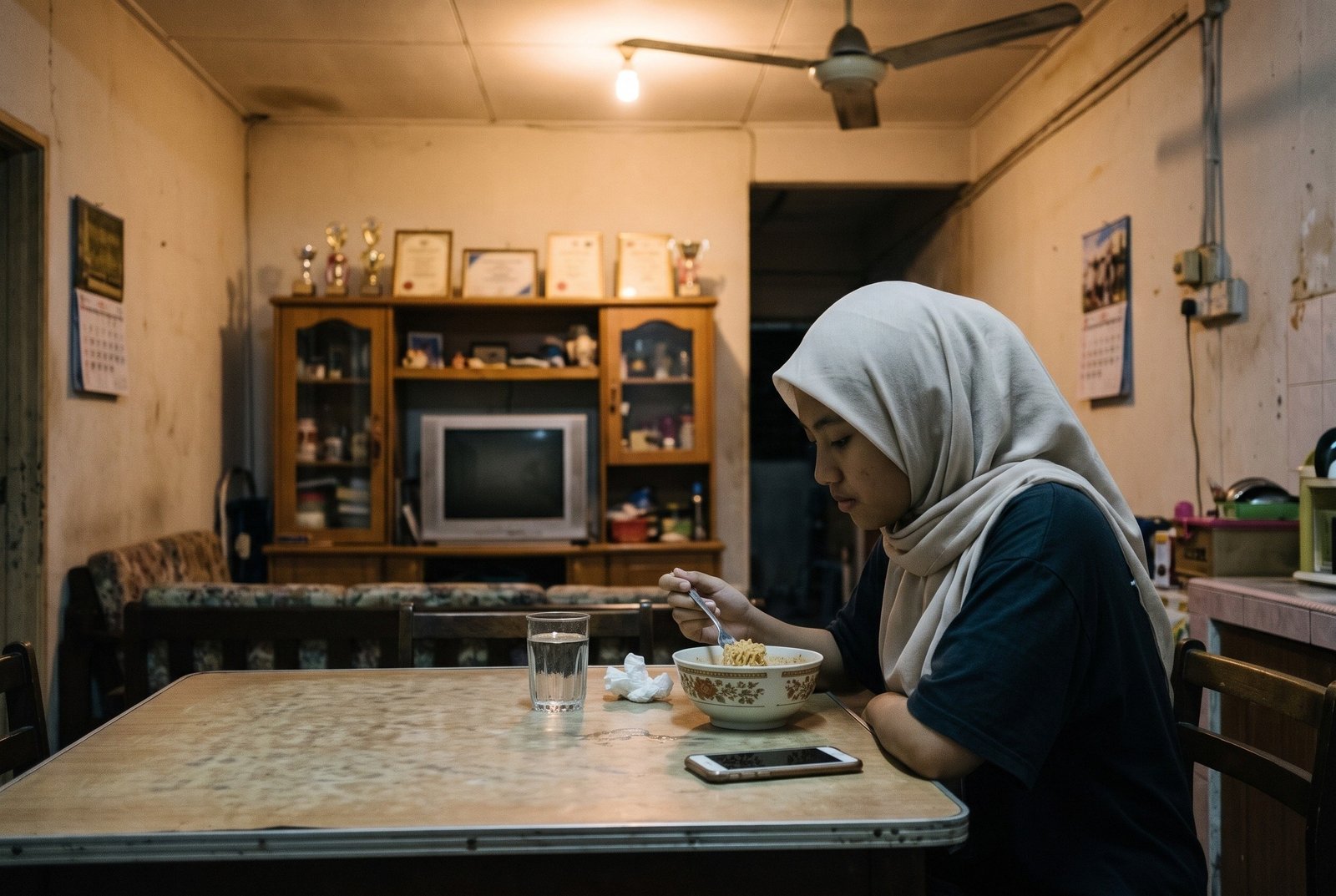
I won that afternoon. Best speaker. A small plastic trophy that rattled when I walked home. When I opened the gate, the porch was empty and the Myvi was still gone. I put the trophy on top of the TV cabinet next to the other ones, wiped the dust off with my sleeve, and boiled Maggi.
Mak came home after dark. She kissed my forehead, smelled of hospital soap and highway dust, and said, "Next time, sayang. I promise."
I said, "Okay, Mak."
I was already learning how to be the easy child.
THE MYVI AT SIX
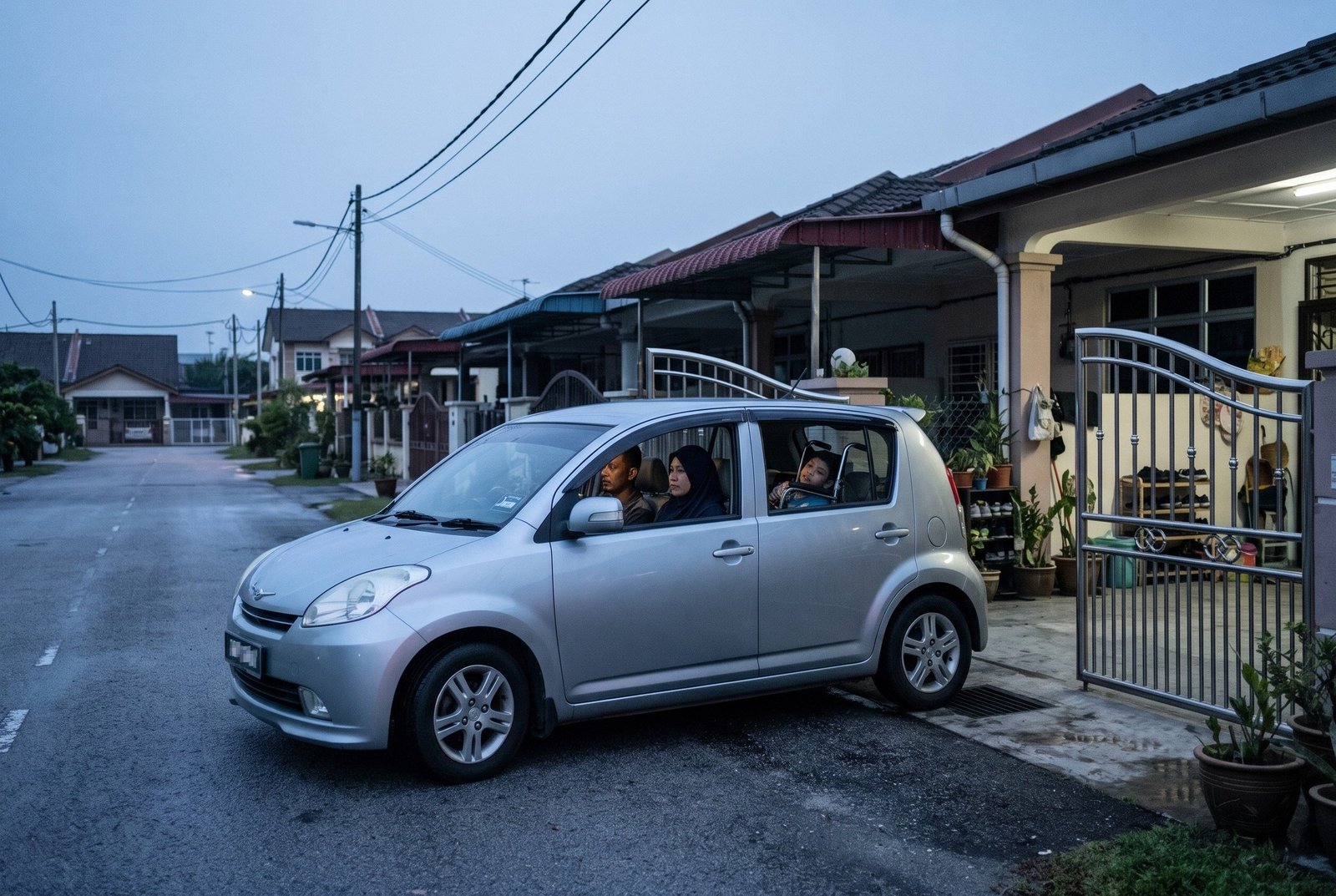
Amir has cerebral palsy. He was born when I was seven. By the time I was nine, Saturdays belonged to him.
Abah would carry him to the back seat before the azan for Subuh had finished echoing off the terrace roofs. Mak packed a thermos of milo, a folded wheelie bag, and a change of clothes. The Myvi's engine coughed once, then pulled out of our Falim porch while the sky was still the colour of wet cement.
I watched from the upstairs window more times than I can count.
Debates. Prize-givings. Sports day. The inter-school tournament where I came first in Malay public speaking and nobody from my family was in the hall to hear the certificate paper crackle when they shook my hand.
Mak always texted from the PLUS highway: How did it go, sayang?
I always typed: Fine.
Then I ate Maggi alone at the kitchen table, the ceiling fan ticking, trophies gathering a thin film of dust on the TV cabinet like they were waiting for someone who never arrived.
I told myself I understood. Amir needed them more. Fair is not always equal. I was the strong one. The healthy one. The one who could manage.
So I stopped asking.
THE EASY CHILD
By sixteen I had fourteen trophies and a quiet kind of anger I never named.
I became the daughter who packed her own bag, walked to the hall alone, and smiled in the photos as if the empty chair was normal. Teachers said, "Your parents must be so proud." I said, "Yes." I never corrected them.
Once, after a big tournament, a friend's mother brought her flowers and took thirty photos. I stood to the side with my certificate rolled tight in my fist. When Mak called that night from the hotel near the therapy centre, she said, "I wish I was there, sayang. Next time."
I said, "It's okay, Mak. Amir needs you."
I meant it. And I didn't.
That is the strange maths of being the sibling who can walk into a hall alone. You love your brother. You understand the appointments. You still want someone to look at you when your name is called.
THE WARDROBE
Mak passed when I was twenty-nine.
We cleared her wardrobe on a humid Thursday in Falim, the kind of afternoon where the air sticks to your arms. Abah sat on the bed holding her tudung. Amir wheeled himself to the doorway and watched.
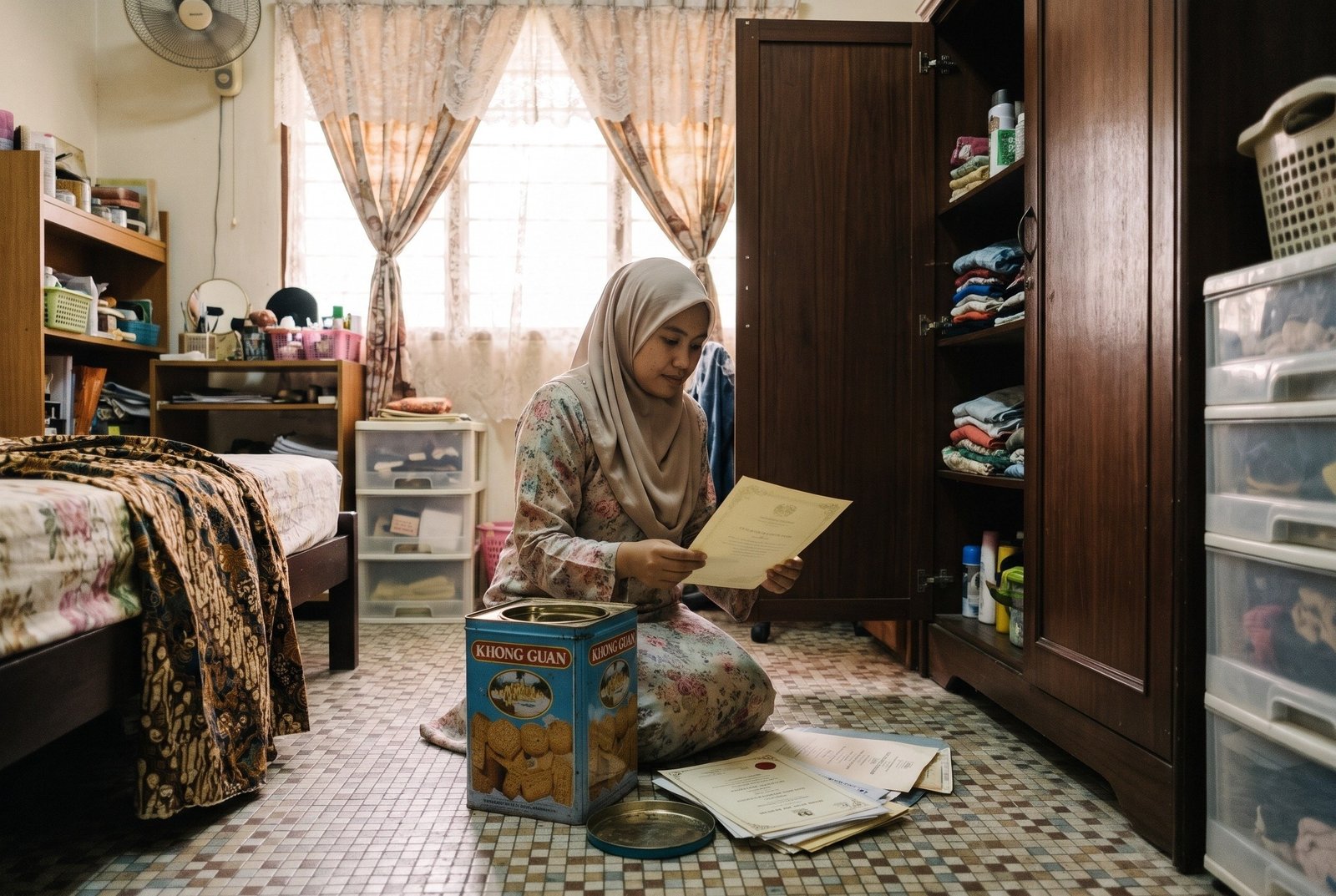
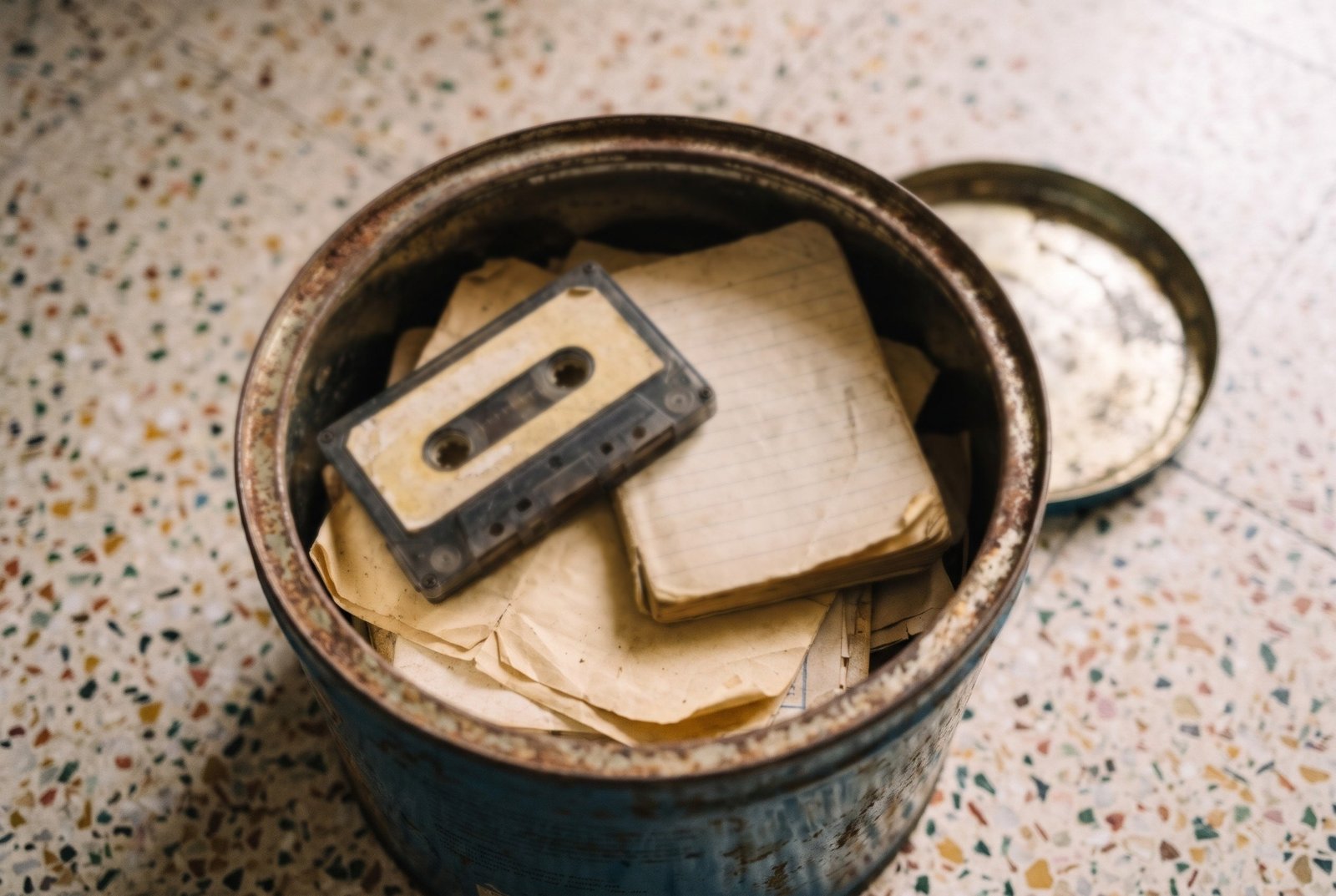
At the back, behind the baju kurung she wore to raya, was an old blue Khong Guan biscuit tin. The lid still had that faded biscuit print. I thought it would be sewing needles, or old buttons, or the receipts Mak never threw away.
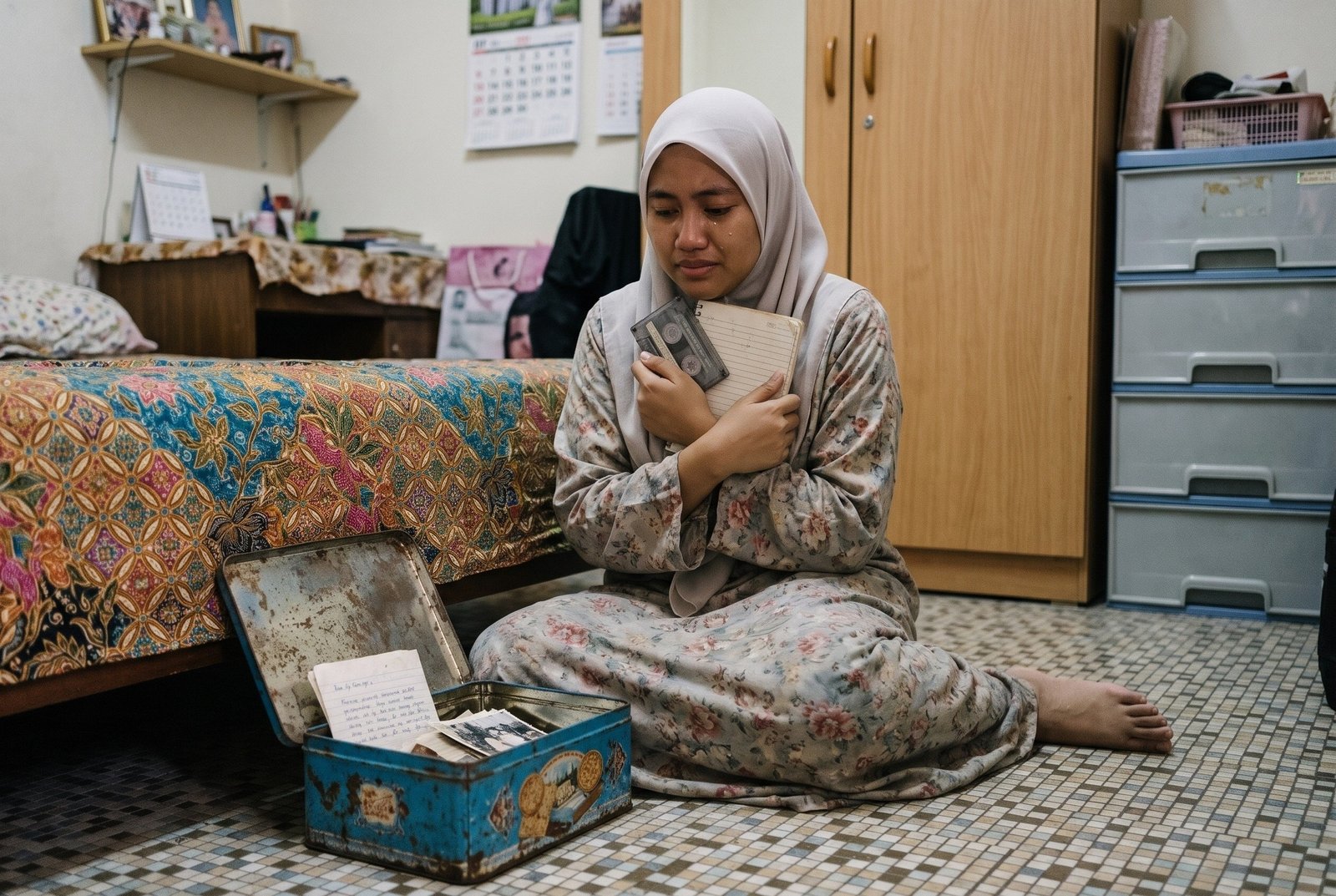
I opened it on the floor.
Certificates. Programmes from every debate I had ever entered. Folded prize-giving sheets with my name highlighted in fading yellow. A cassette tape labelled in her handwriting — my first debate, Form One. And a small lined notebook, the kind you buy at the stationery shop near the pasar malam for two ringgit.
WHAT WAS INSIDE
I sat on the mosaic floor and read.
Every page of the notebook was a Saturday she had missed.
"Aisyah's debate. Couldn't go, Amir's session. She won. I listened to the recording in the car three times. Next time I'll tell her how proud I am."
"Sports day. Long jump. Abah sent a photo. She looked so small on that field. Next time."
"Prize-giving. Best speaker again. I asked Cikgu Fatimah to record. Listened on the way back from KL. Next time, sayang."
Page after page. Same soft pencil. Same promise.
She had asked my Form One teacher to record my first debate on that cassette. She had kept every programme. She had written down the things she could not say out loud because the car was full of Amir's exhaustion and the traffic on the PLUS was heavy and by the time she got home I was already asleep with Maggi still in the pot.
I held the cassette until my hands shook.
THE TEAR LINE
She wrote "next time" forty-one times.
She never got to say it once.
I pressed the notebook to my chest on that bedroom floor and cried the way I never cried at any prize-giving. Abah put a hand on my shoulder. Amir rolled closer and said, quietly, "She talked about you the whole drive home. Every single Saturday."
If your mum ever said "next time" to you, she probably meant it.
Call her before next time runs out.
THE LESSON FOR PARENTS
At Rochford's International School we meet many families where one child needs more appointments, more drives, more of the week. A sibling with additional needs does not make love smaller. It makes the calendar tighter.
Fair does not always mean equal.
But every child still needs to hear it said out loud — not only written down in a tin they find too late.
Here are a few simple ways to start at home:
- Say the pride while they can still hear it. A text after the event is good. A voice note in the car is better. "I am proud of you" should not wait for a free Saturday that never comes.
- Keep one small ritual for the other child. Ten minutes after you walk in the door. Sit on their bed. Ask one real question about their day. The easy child is still a child.
- Tell them the maths out loud. "We have to take Amir today. That does not mean your debate matters less." Children invent quieter, crueller stories when we leave the gap empty.
- Record what you cannot attend. A teacher with a phone. A friend in the second row. Later, watch it together. Presence can be borrowed; silence cannot.
Our children will forgive the empty chair more easily than the unspoken sentence.
They need to know someone was keeping score — and that the score was love, not absence.
Our parents shaped our story. Which lesson will our children carry next?
If your mum ever said "next time," what do you wish she had said instead? Tell us below 👇
💛 Share this with a parent who is always rushing between children.
Lessons From Our Parents is a series from Rochford's International School for the families in our community. Each story is a simple parable, not an account of any real family, shared to start a conversation about raising confident, resilient children. Read more in the series, The School Bag, The Report Card, The Rice Pot, The Murukku, The 9PM Switch, The Plain Water, The Stopwatch and The Results Slip, and more stories from our city in Ipoh Stories.
Rochford's International School by Rochford's Education, Ipoh, Perak, Malaysia.